Русский
 Türkçe
 Tiếng Việt
1. 2026 Liquid-Cooled EV Charging Cable Structures: Detailed Specifications
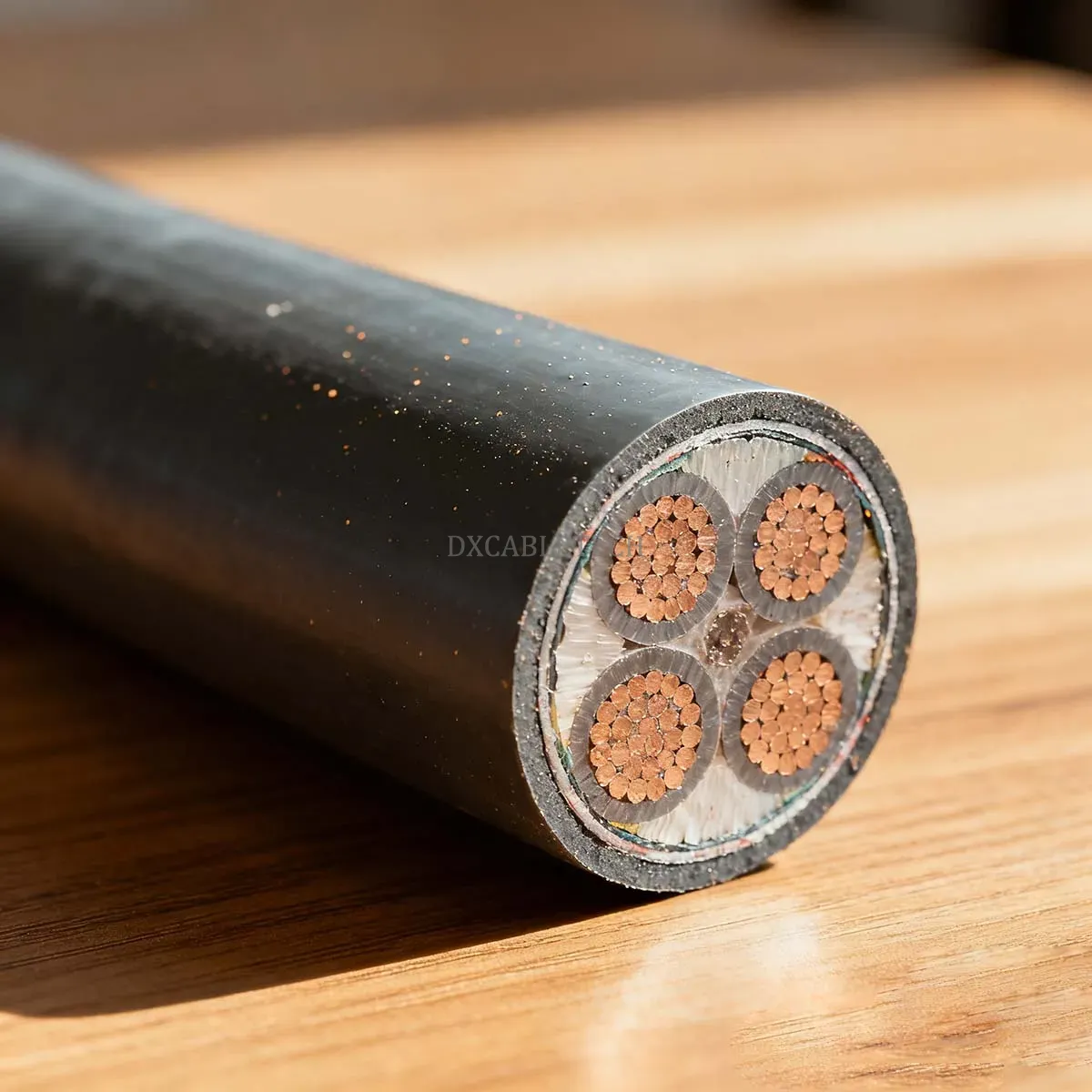
Modern liquid-cooled cables (e.g., Southwire LC3™, OMG high-power HPC, Phoenix Contact second-gen CHARX) feature complex multi-layer designs for immersion or parallel cooling:
| Component | 2026 Typical Specifications | Performance Requirements | Manufacturing Implications & Equipment Needs |
|---|---|---|---|
Power Conductors (DC+/DC-) | Multi-strand fine copper (0.08–0.3mm strands), 35–95mm² cross-section, immersion-cooled | Current density >10A/mm², resistance <0.78 mΩ/m | High-speed servo stranding/bunching with tension <2% error; integrated annealing |
Cooling Channels | Ø6–10mm multi-layer polymer tubes (inner conductive/outer insulating/thermally conductive) | Heat transfer >56%, pressure resistance >0.8–1.2MPa, leak-proof | Precision co-extrusion heads for channel integration; compatibility testing with coolants |
Insulation Layer | XLPE, silicone, TPU, LSZH; thickness 3–12mm, rated 150–180°C+ | Dielectric strength >35kV/mm, volume resistivity >10¹⁴ Ω·cm | Multi-layer co-extrusion (±2°C temp control, wall thickness feedback via ultrasound/β-ray) |
Shielding & Fillers | EMI braided shield (>85% coverage), aramid reinforcement ropes, fillers | Bend life >150,000 cycles, IP67 protection | High-speed braiding machines with tension control; filler integration during stranding |
Outer Jacket | TPU or similar, oil/acid/UV/flame-resistant | Crush/crack/abrasion resistant, RoHS/REACH compliant | Final extrusion layer with precise diameter control (±0.01mm laser gauging) |
Overall | Diameter <35mm, weight <1.8kg/m, supports Boost Mode up to 1MW | Charge time <5–10 min (80% SOC) | Multi-stage gradient cooling + inline monitoring for consistency |
These align with IEC 62893-4-2 requirements: fluid-filled tubes must resist coolant media, with compatibility tests for conductor-tube-insulation interactions (e.g., corrosion if copper contacts coolant directly).
2. Full Manufacturing Process: Step-by-Step with Equipment Focus
A. Conductor Preparation & Stranding (Critical for High-Strand Flexibility)
Process Details: Anneal fine copper strands → multi-strand bunching (19–127 strands) → integrate cooling tubes (central immersion or parallel).
Key Parameters: Stranding pitch 10–20mm, tension 0.5–2N per strand, speed 1500–2500rpm.
Challenges: Strand scattering, friction heat, tube misalignment (>0.5mm deviation causes uneven cooling).
Equipment Recommendations: Servo-driven high-speed bunchers/stranders (e.g., DX series equivalents: real-time tension feedback <1.5% error, auto-annealing). Inline laser strand counting and annealing ovens.
Factory Insight: In our Dongguan trials, servo upgrades reduced strand breaks to <0.08% and improved downstream extrusion uniformity by 28%.
B. Multi-Layer Co-Extrusion & Cooling Channel Integration (Core Process for Liquid-Cooled Cables)
Process Details: Feed conductor + cooling tubes into co-extrusion crosshead → simultaneous extrusion of insulation, isolation, and jacket layers (5–7 layers total). Channels formed via dedicated polymer tubes.
Key Parameters: Melt temperature ±2–3°C (silicone low-temp 120–150°C), extrusion pressure <150bar, die temperature +15–25°C above melt to prevent surface defects.
Challenges: Precise tube positioning/sealing to avoid leaks; layer adhesion failures; bubbles from moisture or pressure fluctuations.
Equipment Recommendations: Advanced multi-layer co-extrusion heads (5+ layers, independent zone heating/cooling); servo screw extruders (L/D ≥30:1 for homogeneous melt); real-time wall thickness monitoring (ultrasonic/β-ray feedback auto-adjusts screw speed). Vertical co-extruders for secondary layers (e.g., color stripes or additional barriers).
Factory Insight: Upgrading to precision co-extrusion reduced wall thickness variation to <2.5% and concentricity to >97%, cutting bubble defects by 35%. Compatible with water-glycol or biodegradable coolants (e.g., Shell E4, FUCHS TF).
C. Post-Extrusion Cooling, Detection & Forming
Process Details: Multi-zone gradient cooling (water 40°C → 25°C → air); embed sensors (temperature/pressure).
Challenges: Uneven cooling → shrinkage/cracks; leaks under pressure (>1.2MPa test).
Equipment Recommendations: Multi-stage troughs with heat recovery (reuse waste heat for pre-heating, 15–20% energy savings); inline laser diameter gauging (±0.01mm), computer vision surface inspection, X-ray for channel integrity.
Trend: Polymer heat exchangers (VOSS-style multi-layer tubes) embedded for peak thermal load cooling.
D. Shielding, Jacketing, Final Assembly & Testing
Process Details: High-speed EMI braiding → final TPU jacket extrusion → spark/hi-pot testing → coiling.
Tests: 3500V AC withstand, >2000MΩ insulation resistance, >150,000 bend cycles, leak rate <0.1%.
Equipment: Automated take-up with tension control; integrated testing stations.
3. 2026 Production Challenges & Proven Solutions
| Challenge | Impact (High-Power Trends) | Likelihood | Solutions & Equipment Upgrades | Expected Improvement |
|---|---|---|---|---|
Coolant Sealing/Leakage | Safety risks, corrosion, system failure | High | Multi-layer polymer tubes, X-ray inline detection, IEC compatibility tests | Leak rate <0.05% |
| Thermal Uniformity | Localized overheating, insulation degradation | High | Immersion + multi-circuit designs, AI predictive temperature models | Fluctuation <±5°C |
| Material Compatibility/Cost | Coolant price +18%, inconsistency | Medium | Multi-supplier certification, recycled conductors, precise dosing | Cost reduction 10–15% |
| Complex Multi-Layer Extrusion | High scrap (10–20%), parameter tuning difficult | High | Modular servo co-extrusion + data logging, small-batch pilots | Scrap to 4–6% |
| Standards & Certification | Frequent IEC/MCS updates, TÜV/UL required | Medium | Future-proof modular equipment, third-party lab partnerships | Compliance >95% |
Sealing remains the toughest (TST Cables notes tear/explosion resistance critical). Phoenix Contact's optimized cooling concepts enable 1MW Boost without diameter increase.
4. ROI & Real-World Case Studies
For a mid-size line (150,000m/year liquid-cooled cables):
Investment: Precision co-extrusion + stranding + monitoring: 1–2.5 million RMB.
Benefits: Scrap from 12% → 4%, capacity +45%, easier certification for major OEMs (BYD/Tesla supply chains).
ROI: 6–12 months payback (savings + revenue >2.5 million RMB/year).
Our Experience: Dongguan implementations with servo co-extrusion improved thermal consistency 32%, enhanced cable feel/lifespan per client feedback.
5. Immediate Action Roadmap for Manufacturers
Audit current extruders: Screw wear, crosshead compatibility with cooling tubes.
Test coolant samples: Compatibility/corrosion with conductors.
Pilot upgrades: One precision co-extrusion line + wall thickness feedback.
Optimize parameters: Cross-reference our "Top 25 Cable Extruder Problems Solved" article.
Prepare compliance: IEC 62893-4-2 certification pathway.
Consult for tailored solutions: Full liquid-cooled line diagnostics/turnkey setups.
Liquid-cooled EV charging cables drive 2026 growth—precise equipment and process mastery secure competitive advantage. Our Dongguan team, with 20+ years in extrusion automation, offers diagnostics, upgrades, and training. Need customized high-voltage liquid-cooled assessments, supplier intros, or quotes? contact us:dxcabletech
Explore the complete cable manufacturing system:
→ Cable Manufacturing Process & Equipment Guide