English
 Русский
 Tiếng Việt
Unlocking High-Performance Network Cable Manufacturing Through Advanced Automation
In modern LAN cable production, precision and consistency are no longer optional—they are critical. Every meter of Cat5e, Cat6, or Cat6A cable must meet exacting standards for signal integrity, twist accuracy, and insulation quality. Achieving this requires a comprehensive understanding of cable creation, a term that describes the integrated manufacturing processes shaping conductor geometry, insulation, twisting, taping, and coiling.
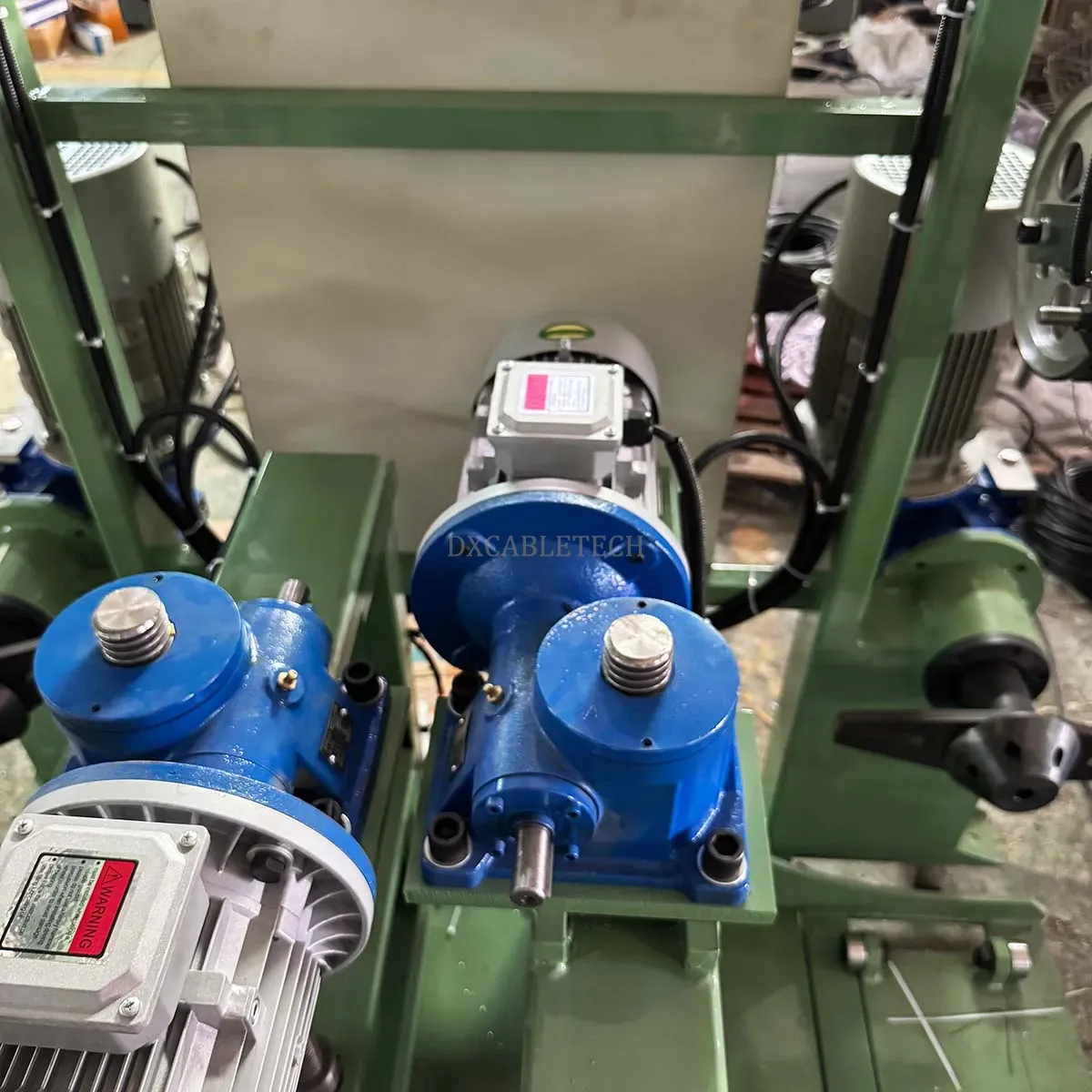
At the forefront of this innovation is Dongguan Dongxin (DOSING) Automation Technology Co., Ltd., a national high-tech enterprise founded in 2009. Led by industry veteran Lin Huazhong, with nearly three decades of R&D experience, DOSING transformed LAN cable manufacturing by integrating PLC-controlled systems into cantilever single-twist machines. This breakthrough improved production efficiency by over 40% while maintaining precise control over twist pitch, tension, and conductor alignment—key factors in high-quality LAN cable creation.
This article explores how cable creation drives precision in LAN cable manufacturing, the technologies enabling it, and why it has become a competitive advantage for modern cable factories.
Understanding Cable Creation in LAN Cable Manufacturing
In LAN cable production, cable creation refers to the tightly coordinated sequence of steps that convert raw copper into a fully insulated, twisted-pair cable. Core elements include:
Insulation extrusion (PVC, PE, LSZH)
Pair twisting and back-twisting
Stranding or bunching according to design specifications
Taping and shielding for EMI protection
Coiling, cutting, and packaging
Precision testing using laser diameter gauges and spark tests
LAN cables have stricter tolerances than general-purpose cables. Even minor deviations in twist pitch, pair geometry, or insulation thickness can compromise signal performance, resulting in attenuation, crosstalk, or impedance variation.
Thus, cable creation is not a single operation but a holistic approach to maintaining electrical and mechanical stability throughout the production line.
Why Precision Matters for LAN Cables
Modern network applications demand higher data speeds, lower latency, and enhanced signal integrity. Cable creation affects:
Impedance consistency
Pair twist uniformity
Shielding effectiveness
Signal attenuation
For high-performance LAN cables, deviations in extrusion or stranding can make the difference between meeting industry standards and failing certification tests. Optimizing cable creation ensures that LAN cables meet Cat6/Cat6A standards and support high-speed applications such as data centers, industrial automation, smart homes, and 5G networks.
DOSING Innovations Elevating Cable Creation
DOSING Automation’s PLC-controlled cantilever twist machines address traditional bottlenecks:
Mechanical speed limitations
Manual tension adjustment
Inconsistent twist at high RPM
Difficulty maintaining pitch accuracy
With PLC integration, DOSING machines deliver:
40% faster operational speed
Real-time tension compensation
Precise twist pitch control
Reduced defect rates in LAN cable pairs
This directly enhances pair twisting, stranding concentricity, and taping uniformity, essential for high-quality LAN cable creation.
Extrusion: The Foundation of Cable Creation
Insulation extrusion is critical in LAN cable quality. Variations in wall thickness or diameter can lead to impedance mismatch, signal loss, and poor high-frequency performance. Key factors in extrusion include:
Melt temperature stability
Accurate die pressure control
Real-time diameter feedback
Efficient cooling
DOSING’s Core Wire Insulation Extruder Production Line integrates laser gauge monitoring and closed-loop control systems, ensuring precise, repeatable conductor geometry—a fundamental requirement for precision LAN cable creation.
Stranding and Bunching for Stable Pairs
Twisting is at the heart of LAN cable performance. Cat6/Cat6A cables require consistent pair twist lengths to reduce crosstalk and maintain impedance. DOSING provides:
Single, double, and pair twist machines
Back-twist and cantilever systems
Multi-head pay-off units for consistent feed
These technologies maintain concentricity and symmetry, ensuring that each cable pair performs optimally under high-speed data transmission.
Taping and Coiling: Ensuring Shielding Accuracy
LAN cables often use shielding to minimize electromagnetic interference. Taping precision is vital for:
Correct foil overlap
Stable tension
Uniform layer application
DOSING’s Automatic Coiling and Multi-layer Taping Machines deliver high-speed, tension-controlled taping, critical for shielded LAN cables (S/FTP, F/UTP, U/FTP).
Auxiliary Equipment for Reliable Cable Creation
Consistent cable creation depends on supporting equipment:
High-speed cable cutting units
Shaftless pay-off systems
Winch pay-off synchronization
Cable accumulation and tension control
DOSING’s auxiliary machines ensure continuous workflow, reducing downtime and preserving the uniformity of the cable creation process.
Cable Creation as a Competitive Advantage
Optimizing cable creation benefits LAN cable factories by:
Improving yield and reducing scrap
Ensuring consistent certification compliance
Reducing maintenance costs
Increasing production speed
Enhancing product reliability
Factories that master cable creation gain a strategic edge in quality, efficiency, and global competitiveness.
Conclusion: The Future of Precision LAN Cable Creation
As network infrastructures demand faster, smarter, and more reliable cables, cable creation has emerged as the defining factor for LAN cable performance. From extrusion to twisting, taping, and coiling, every stage influences the final product’s electrical and mechanical integrity.
With innovations like PLC-driven twist machines and automated extrusion systems, DOSING Automation demonstrates how advanced cable creation can deliver high-quality, high-performance LAN cables consistently, efficiently, and reliably. For engineers and procurement managers, understanding and optimizing cable creation is no longer optional—it is the foundation for success in modern cable manufacturing.