Русский
 Türkçe
 Tiếng Việt

High-speed bunching may look straightforward at first glance: multiple conductors feed in, a uniform twisted bundle exits, and the take-up reel builds layer by layer. But anyone who has run a bunching machine knows the winding section is where the real complexity begins. Even slight variations in tension, rotor balance, wire lubrication, or drum synchronization can instantly appear as irregular winding patterns—gaps, loose coils, side shifting, or uneven layers. These defects are not just cosmetic; they signal underlying mechanical or automation issues that can affect cable roundness, stability, and long-term performance. Fixing winding inconsistency requires looking beyond the symptoms on the reel and understanding the dynamic interactions shaping every coil during high-speed operation.
Why Winding Inconsistency Happens: The Deeper Mechanisms
Before you fix the problem, you need to understand where it begins. Winding inconsistency is almost never caused by one single factor. It’s a chain reaction inside the bunching system involving:
dynamic tension fluctuations
rotor vibration or rotor unbalance
improper traverse guiding
reel deformation or eccentricity
inaccurate PLC synchronization
lubrication or wire surface differences
environmental factors such as temperature and humidity
When any of these factors drift out of their ideal range, winding inconsistency becomes inevitable.
Let’s break down each category and how to fix it properly.
1. Tension Fluctuation: The Invisible Enemy of Clean Winding
What happens when tension is unstable
If the tension rises or drops suddenly during bunching, the finished cable cannot settle smoothly on the reel. You get:
loose loops
sudden tight bands
shifting side layers
unstable cable pitch
These patterns usually appear randomly, making operators think the problem is “machine noise” or “speed too high”. In reality, the root cause is tension instability.
How to fix it
Use dancer tension control instead of mechanical braking for precision.
Inspect pay-off brake pads, bearings, and shafts.
Lubricate payoff shafts to prevent micro-sticking.
Ensure wire lubrication is consistent; dry wire behaves differently from PVC or enamelled wire.
Upgrade to servo-controlled tension systems if coil uniformity is critical.
If your bunching machine is older than 5–8 years, tension systems usually drift and require recalibration.
2. Rotor Vibration and Rotor Unbalance
This is the hidden cause most engineers overlook.
When the rotor is slightly unbalanced—even 10–20 grams at high speed—the vibration is enough to disrupt winding tension and cable lay angle, producing inconsistent coil formation.
Typical signs
cable oscillates at the exit
periodic wave patterns in the winding
resonance noise from the machine body
reel shaking at high RPM
Solutions
Perform regular dynamic balancing of the rotor
Tighten all rotor Bolts & clamping fixtures
Check bearings and replace worn ones
Recalibrate machine speed curves after maintenance
Install vibration monitoring if operating above 3000 RPM
Manufacturers like Dongguan Dongxin (DOSING) integrate PLC-based vibration early-warning functions, which help reduce winding inconsistency caused by rotor instability.
3. Traverse Guide Inaccuracy
This is one of the most direct causes of side-shifting or overlapped coils.
Common issues
guide rail wear
inconsistent traverse stroke
delayed traverse reversal
servo lag in old controllers
How to fix it
Inspect traverse screws and nuts for backlash
Replace servo motors if response time slows
Add limit sensors for precise layer switching
Lubricate the guide system frequently
For older machines: retrofit a PLC-synchronized traverse
When the traverse aligns perfectly with reel rotation, winding uniformity improves instantly.
4. Reel Quality and Mechanical Deformation
Even a perfectly tuned buncher cannot produce clean winding on a bad reel.
What to check
reel flange bending
eccentricity in reel rotation
worn center holes
differences in reel material stiffness
aging plastic reels expanding under load
Corrective actions
Use precision-balanced steel reels for high-speed production
Check reel concentricity before mounting
Replace reels showing even minor deformation
Avoid mixing old and new reels within the same batch
A well-balanced reel contributes up to 30 percent of winding consistency.
5. Control System Synchronization and PLC Timing
Modern bunchers depend heavily on software precision.
If the PLC parameters controlling tension, traverse, or linear speed are slightly mismatched, the machine may run without errors but produce poor winding.
Problems caused by PLC mismatch
late traverse changes
take-up overruns or delays
micro tension drops
floating pitch inconsistencies
Fixes
recalibrate closed-loop control for tension
update machine firmware
synchronize motor encoders
run diagnostic modes to identify timing drift
Manufacturers like DOSING integrate full digital synchronization across rotor, take-up, pay-off, and traverse, ensuring smoother winding even at high speeds.
6. Environmental and Material Factors
Yes—these matter more than most plants realize.
Factors affecting winding
humidity changing insulation friction
temperature softening PVC or PE
dust accumulating in traverse tracks
wire surface residue
Preventive steps
maintain constant workshop temperature
keep humidity below 70 percent
wipe wires before entry
clean guide wheels weekly
This alone can reduce inconsistency by 10–15 percent.
Practical Diagnostic Checklist: Fix Winding Inconsistency in Under 10 Minutes
Operators love this because it helps narrow the problem fast:
If the winding looks loose → check tension.
If the winding shifts sideways → check traverse.
If the winding has periodic waves → check rotor balance.
If only specific reels cause issues → check reel deformation.
If inconsistency occurs at certain speeds → check PLC timing.
This flowchart approach cuts troubleshooting time dramatically.
When to Consider Upgrading Your Bunching Machine
If your buncher is older than 10 years, or operating above 2500–3000 RPM, inconsistency usually comes from:
outdated mechanical components
non-digital control systems
slow servo response
poor vibration control
friction-based tension systems
Modern solutions—such as DOSING's high-speed double twist and bunching machines—use:
PLC servo tension control
advanced traverse synchronization
rotor vibration algorithms
reinforced structural stiffness
precision pay-off units
Upgrading these systems improves winding stability by 30–50 percent.
Conclusion: Building a Stable, High-Efficiency Bunching Process
Winding inconsistency is not just an operational annoyance—it is a symptom of deeper mechanical, dynamic, or control-system issues. By understanding how tension, rotor balance, traverse accuracy, reel geometry, and PLC timing interact, manufacturers can eliminate inconsistency at its root instead of reacting to coil defects on the reel.
The smartest plants today focus on prevention:
stable tension → stable lay → stable winding → stable product.
With proper maintenance, diagnostics, and modern automation systems, your bunching line can deliver clean, uniform winding even at the highest speeds, ensuring better product quality, fewer stoppages, and lower overall cost per meter.
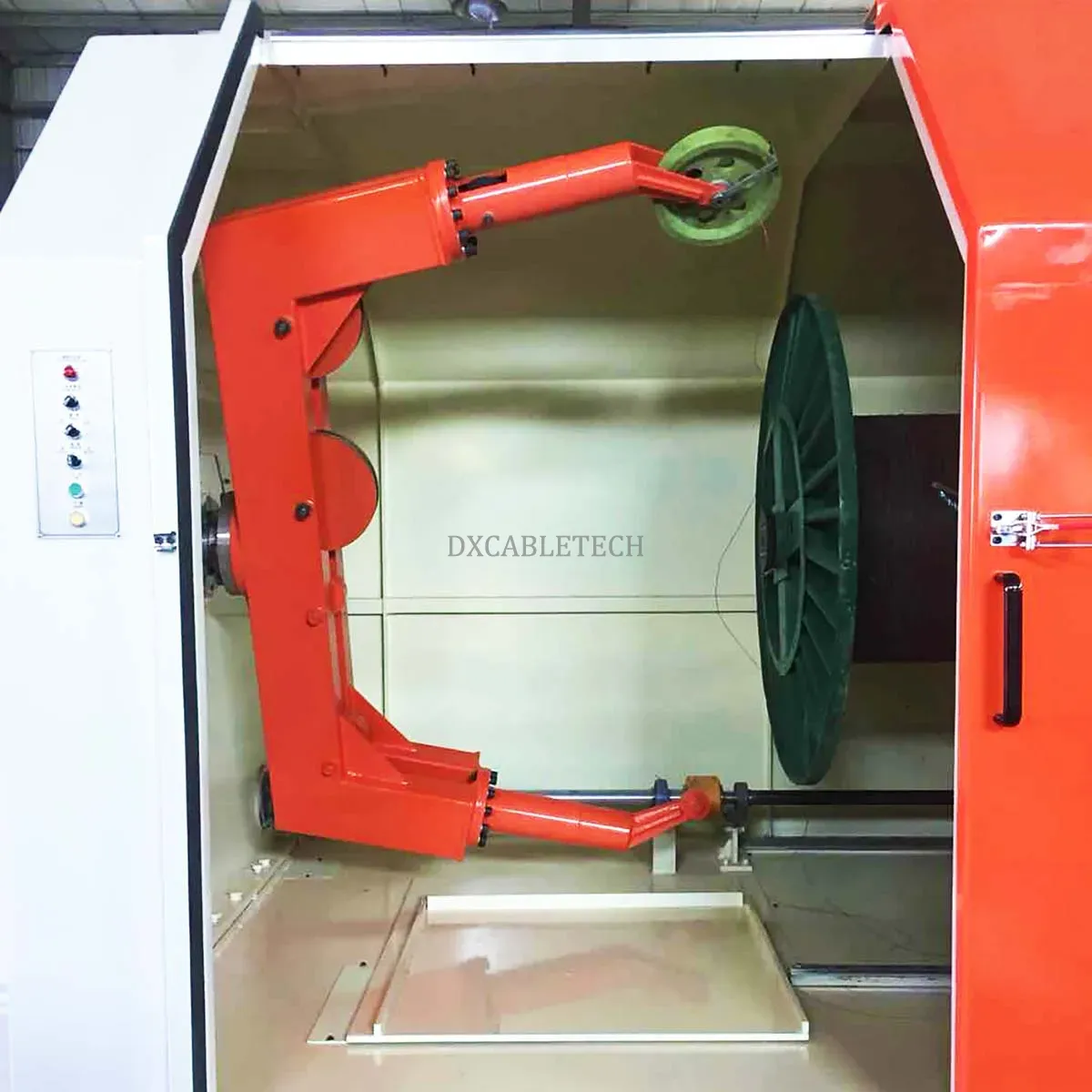
Explore the complete cable manufacturing system:
→ Cable Manufacturing Process & Equipment Guide