Русский
 Türkçe
 Tiếng Việt

In today’s cable manufacturing industry, the pressure to increase output is relentless. Clients demand faster delivery, large-scale projects require massive volumes, and production lines are constantly being upgraded with faster extrusion machines, high-speed draw towers, and automated coating lines. On paper, these machines promise greater efficiency and higher profits. But anyone who has worked on the factory floor knows that speed alone does not guarantee quality or reliability. In fact, a relentless focus on speed can sometimes increase defects, raise costs, and undermine long-term reputation.
At DX Cable Tech, a leading innovator in industrial and specialty cables, the engineering and production teams have learned that material consistency is far more critical than machine speed. The best machine in the world cannot compensate for raw materials that behave unpredictably. From insulation polymers to conductor metals, even minor variations can lead to catastrophic failures in high-stress applications.
The Hidden Pitfalls of Speed-Obsessed Manufacturing
When a production line is running at full capacity, any irregularity in raw materials becomes magnified. Consider the case of extrusion. Modern extruders can process polymer insulation at incredible rates, but if the polymer viscosity or filler content fluctuates, the resulting cable may have uneven insulation thickness, micro-bubbles, or weak points along its length.
These imperfections are not always obvious immediately. In industrial cables for power transmission, high-voltage applications, or data communication, small defects may only appear weeks or months later, after the cable is installed in the field. The consequences are serious:
Increased scrap and waste: Defective sections must be cut, reprocessed, or discarded, raising costs.
Production delays: Machines must stop to adjust for material inconsistencies, nullifying the benefits of speed.
Customer dissatisfaction: Faulty cables lead to complaints, returns, or even safety incidents, which damage brand reputation.
A senior materials engineer at DX Cable Tech explains:
"Fast machines can produce large quantities, but inconsistent materials produce unpredictable quality. It doesn’t matter if the line is running at 120 meters per minute—if the raw polymer or conductor is inconsistent, the product fails long before it reaches the customer."
What Material Consistency Really Means
Material consistency is more than just meeting specifications. It is the uniformity of physical and chemical properties across every batch of raw material, ensuring predictable behavior during processing and reliable performance in the field.
In cable manufacturing, material consistency covers:
Mechanical properties: Insulation must maintain tensile strength, flexibility, and resistance to abrasion and deformation.
Electrical properties: Conductors must deliver consistent resistance, conductivity, and shielding effectiveness.
Chemical stability: Polymers, fillers, and metals must resist degradation from heat, UV exposure, or chemical interactions over time.
Dimensional uniformity: Thickness, diameter, and coating layers must remain within strict tolerances.
A cable that fails to meet these criteria—even slightly—can lead to field failures, which are often more costly than production inefficiencies. For example, a slightly under-thick insulation in a high-voltage cable can trigger electrical breakdown, while uneven jacketing can cause premature abrasion and exposure to the elements.
Real-World Example: The Cost of Inconsistent Insulation
A case study at DX Cable Tech illustrates the real impact of material variability. The company was producing industrial-grade control cables for a large factory installation. Two batches of insulation polymer arrived from different suppliers. Batch A met specifications exactly. Batch B, however, had a slightly higher moisture content, altering viscosity.
Running the same extrusion settings, the team noticed small but critical differences:
Micro-voids appeared in some sections.
Certain sections were more brittle after cooling.
Overall diameter varied slightly, impacting the final assembly.
Even with the fastest extrusion line in operation, the end product failed multiple internal quality checks, delaying shipment and increasing production costs. If these cables had been installed without detection, the end customer could have faced downtime, electrical faults, or even safety hazards.
The lesson: machine speed amplifies the problems of inconsistent materials, rather than compensating for them.
How DX Cable Tech Ensures Material Consistency
Recognizing the stakes, we has implemented a comprehensive material management strategy, which includes:
Supplier Collaboration: Long-term partnerships with trusted suppliers ensure raw materials are consistently manufactured to specification. we shares performance feedback to help suppliers maintain high quality standards.
Incoming Material Testing: Every batch of polymer, conductor, and jacketing material undergoes rigorous testing for mechanical, electrical, and chemical properties before entering production.
Process Adaptation: Production parameters are adjusted based on real-time material properties. Viscosity, melting point, and flow characteristics are monitored to maintain optimal extrusion conditions.
Continuous Monitoring: Sensors and automated inspection systems track variations in cable thickness, insulation integrity, and conductor performance throughout the production line.
Training and Awareness: Staff are trained to detect subtle material inconsistencies, understand their impact, and respond proactively.
By focusing on material consistency first, DX Cable Tech ensures that high machine speed becomes a true advantage, rather than a liability.
Beyond Production: Why Consistency Matters to Customers
Material consistency isn’t just a factory concern—it directly affects the end-user experience. Clients in power distribution, data centers, and industrial automation rely on cables to perform under demanding conditions. A cable that fails under heat, load, or environmental stress can cause:
Equipment downtime
Safety hazards for personnel
Costly repairs or replacements
By prioritizing material consistency, manufacturers provide predictable, reliable performance, building trust and long-term partnerships with customers. In a market where quality differentiates brands, this consistency is more valuable than any speed metric.
The Future of Cable Manufacturing
As global demand for advanced cabling continues to rise, manufacturers face a critical choice: continue chasing machine speed as the primary metric of success, or invest in material science, supplier reliability, and rigorous testing. The industry trend is clear. Companies that prioritize material consistency first, then optimize production speed are achieving higher yield, fewer defects, and stronger customer satisfaction.
DX Cable Tech’s approach exemplifies this philosophy. By integrating advanced material management, precise process control, and continuous quality monitoring, the company produces cables that meet the most demanding industrial and infrastructure requirements. The result: fast production lines that consistently produce high-quality, reliable products.
Key Takeaways
Fast machines cannot compensate for poor materials. Even the best extrusion or coating equipment fails if raw inputs are inconsistent.
Material consistency reduces defects, waste, and downtime, improving overall production efficiency.
End-user reliability depends on consistent materials, which translates to brand trust and long-term business success.
Investing in suppliers, testing, and process monitoring creates predictable outcomes that speed alone cannot guarantee.
In the race for manufacturing efficiency, it’s tempting to prioritize speed, but true industry leaders know that consistency is the real competitive advantage. For cable manufacturers like DX Cable Tech, the lesson is simple: fast machines produce quantity, but consistent materials produce quality—and quality drives reputation, revenue, and long-term growth.
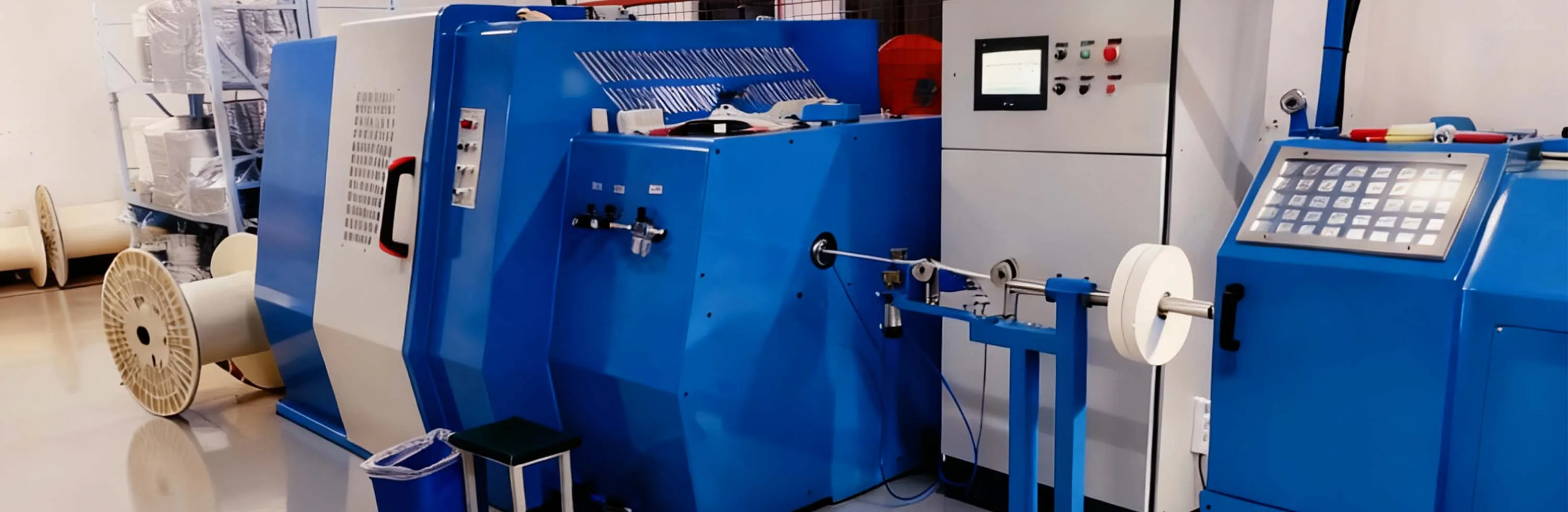
Explore the complete cable manufacturing system:
→ Cable Manufacturing Process & Equipment Guide