Русский
 Türkçe
 Tiếng Việt
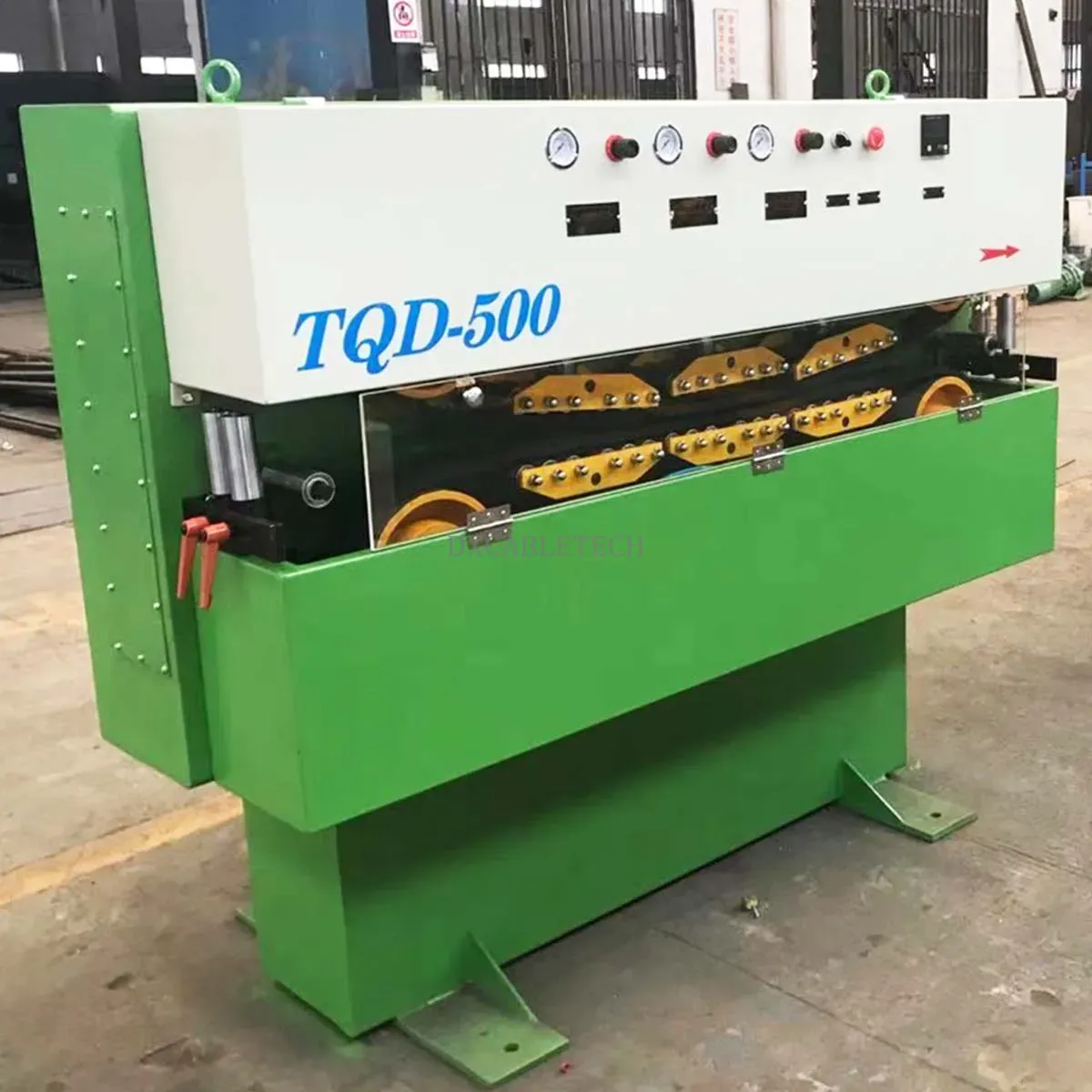
Coiling machines are critical in wire and cable production, responsible for winding finished cables accurately and efficiently. However, cutter failure is one of the most common causes of downtime, scrap, and inconsistent coil quality.
Preventing cutter failure requires a system-level approach that combines mechanical design, material selection, process optimization, and predictive maintenance. DXCableTech coiling and cutting machines are engineered to minimize these failures, supporting high-speed, high-precision cable production.
1. Understanding Coiling Machine Cutters
Coiling machine cutters come in several types:
| Cutter Type | Description | Typical Use |
|---|---|---|
Rotary Blade | High-speed rotating knife | Continuous single-core and multi-core cables |
Guillotine Blade | Straight-edge shearing | Precise length cutting for high-voltage cables |
Shear/Hybrid | Combination rotary and shear | Multi-layer or armored cables |
Key factors influencing cutter performance:
Blade material (hardened steel, carbide, coated alloys)
Edge geometry (angle, bevel, radius)
Mechanical stability (shaft alignment, bearings, frame rigidity)
Failures often appear gradually: slight vibration → uneven cuts → chipping → complete failure.
2. Material and Cable Considerations
Different insulation and cable types significantly impact cutter wear:
| Insulation Type | Hardness | Cutting Challenge | Blade Recommendation |
|---|---|---|---|
PVC | Soft | Can stick at high temperature | Hardened steel, medium bevel |
XLPE | Medium-Hard | Higher wear, uneven cuts | Carbide-coated blades |
LSZH | Hard | Adhesion to blade, high heat | High-hardness alloy, cooling recommended |
Multi-Layer EV | Variable | Complex cross-section, high stress | Hybrid blades, precise geometry |
Other factors:
Cable diameter: Larger diameters require more cutting force
Conductor type: Multi-strand or armored conductors increase torsion and vibration
3. Common Causes of Cutter Failure
| Failure Type | Cause | Impact | Prevention |
|---|---|---|---|
Blade chipping | Hard insulation or improper blade | Ragged cuts, scrap | Use carbide-coated blades, correct bevel angle |
Misalignment | Shaft/bearing wear | Uneven cuts, vibration | Precision alignment, vibration-damped frames |
Feed/Tension issues | Uneven tension or feed | Blade overload or slip | Servo-controlled haul-off, synchronized tension |
Over-speed | Line speed exceeds blade rating | Heat buildup, wear | Match speed to blade spec, controlled acceleration |
Contamination | Dust, debris, or lubrication | Abrasion, sticking | Clean feed paths, debris collection, cooling |
4. Equipment-Level Solutions
4.1 Blade Material and Geometry
Hardened steel, carbide, or coated alloys for wear resistance
Edge geometry optimized for insulation type and thickness
Cooling airflow or water for high-speed operation
4.2 Precision Alignment and Bearings
Rigid shaft and bearing design
Frame vibration damping
Digital alignment tools for repeatable tolerances
4.3 Tension and Feed Control
Servo-driven haul-off and pull-off systems
Real-time tension monitoring
Synchronization with line speed prevents torque spikes
4.4 Debris Management and Cooling
Integrated chip/dust removal
Blade housings designed to reduce heat and friction
5. Process Optimization Strategies
| Parameter | Recommendation | Benefit |
|---|---|---|
Blade Type | Match to insulation hardness | Reduced wear, cleaner cuts |
Line Speed | Do not exceed blade rating | Less heat, longer lifespan |
Tension | Maintain uniform tension with sensors | Prevents slipping or overload |
Acceleration | Gradual ramp-up/down | Avoids torque spikes |
Maintenance | Regular inspection and sharpening | Predictive failure prevention |
6. Maintenance and Predictive Monitoring
Inspect blades for chipping, burrs, and wear
Check shaft and bearings for wear and alignment
Use vibration and torque sensors to anticipate failure
Maintain logs for preventive maintenance scheduling
7. Real-World Troubleshooting Examples
| Case | Issue | Solution | Result |
|---|---|---|---|
XLPE high-speed line | Ragged cuts | Servo-controlled haul-off | Scrap reduced, blade life increased 3x |
Multi-layer EV cable | Blade chipping | Upgraded carbide blades, added cooling airflow | Stable cuts, lower maintenance |
PVC single-core | Irregular lengths | Shaft realignment, vibration damping | Consistent coil quality |
8. DXCableTech Solutions
DXCableTech coiling machines are engineered to minimize cutter failure with:
High-grade cutting blades for all insulation types
Precision shaft alignment and vibration-damped frames
Servo-driven feed and tension systems
Integrated debris removal and cooling systems
9. Benefits of Preventing Cutter Failure
Longer blade life
Reduced scrap and downtime
Consistent coil quality
Lower maintenance costs
Increased production efficiency
10. Conclusion
Cutter failure in coiling machines is rarely random. It arises from mechanical, material, and process interactions. Preventing it requires:
Correct blade material and geometry
Precision alignment and vibration control
Servo-controlled tension and feed systems
Predictive maintenance and monitoring
DXCableTech coiling machines integrate these solutions to deliver high-speed, reliable, and high-quality cable winding.
Explore the complete cable manufacturing system:
→ Cable Manufacturing Process & Equipment Guide