How to Improve Adhesion Between Multi-Layer EV Cable Insulation

2025-12-17

Modern electric vehicle (EV) cables rely heavily on multi-layer insulation systems to provide high dielectric strength, mechanical durability, and long-term reliability.

However, achieving perfect adhesion between layers is one of the most persistent challenges in production. Delamination, voids, and air gaps not only compromise insulation performance but can also lead to rejected products, higher scrap, and costly production downtime.

At DXCableTech, we’ve analyzed hundreds of high-voltage EV cable lines. Our findings show that poor adhesion is almost never caused by a single factor—it’s a system-level issue involving material selection, thermal management, extrusion equipment, and auxiliary processes.

This article provides a comprehensive guide to improving multi-layer adhesion, backed by technical insights, production best practices, and equipment design solutions.


1. Material Science: The Foundation of Adhesion


1.1 Polymer Compatibility

  • Multi-layer EV cables often use combinations like XLPE over PE, LSZH over semi-conductive shields, or functional tie layers.

  • Incompatible polymers naturally resist bonding, requiring tie layers or surface activation to enhance adhesion.

1.2 Melt Viscosity and Thermal Behavior

  • Each polymer layer has a specific melt viscosity, affecting flow and interlayer wetting.

  • High-viscosity layers resist spreading, creating micro-voids at the interface.

  • Temperature control must balance adequate melt flow without degrading material properties.

1.3 Surface Energy and Contamination

  • Polymers with low surface energy (like some PE grades) resist bonding.

  • Contamination (moisture, dust, or residues) can dramatically reduce adhesion.

  • Pre-drying and clean feeding systems are essential for consistent layer bonding.


2. Co-Extrusion Equipment and Die Engineering


2.1 Die Design Principles

  • Multi-layer dies must ensure uniform flow and pressure distribution across all layers.

  • Uneven flow causes local gaps or thickness variation, leading to weak adhesion.

  • DXCableTech designs dies with laminar flow paths and optimized land lengths for uniform interface pressure.

2.2 Screw and Extruder Optimization

  • Screw profiles influence shear, mixing, and melt homogeneity.

  • Barrier or multi-stage screws help balance polymer melt temperatures and viscosities, improving bonding.

  • Screw L/D ratios must be tailored to each layer’s material properties.

2.3 Layer Sequencing and Temperature Control

  • Correct order of layer extrusion ensures interlayer wetting before surface solidification.

  • Barrel temperatures must be finely tuned for each polymer, typically within ±1–2°C tolerance.

  • Real-time melt pressure monitoring prevents flow surges that disrupt adhesion.

3. Pulling, Haul-Off, and Tension Dynamics


3.1 Synchronized Take-Up

  • Uneven tension between layers can stretch or separate interfaces before they solidify.

  • Servo-controlled haul-off systems maintain constant contact pressure across layers.

3.2 Tension and Acceleration Control

  • Sudden speed changes or acceleration during start-up or spooling can induce slip or layer separation.

  • Digital tension controllers with high-resolution feedback are recommended for repeatable adhesion quality.

4. Cooling and Calibration Systems


  • Cooling too fast causes differential shrinkage, which can create micro-gaps at interfaces.

  • Controlled water troughs and calibration rollers reduce thermal stress and ensure dimensional stability.

  • Multi-stage cooling and temperature monitoring are crucial for high-voltage, multi-layer EV cables.


5. Troubleshooting Adhesion Failures


IssueLikely CauseSolution
DelaminationIncompatible polymers or missing tie layerUse a compatible tie layer or surface treatment
Voids / air gapsUneven melt flow or high viscosityOptimize die design and screw profile
Surface streaksOverheating or insufficient melt homogenizationAdjust extrusion temperature and mixing zones
Oval conductorUneven tension or pull-offImplement servo-controlled haul-off with synchronized tension
Layer slip during spoolingRapid acceleration or poor tension controlSmooth acceleration ramps and tension stabilization


6. Auxiliary Equipment Considerations


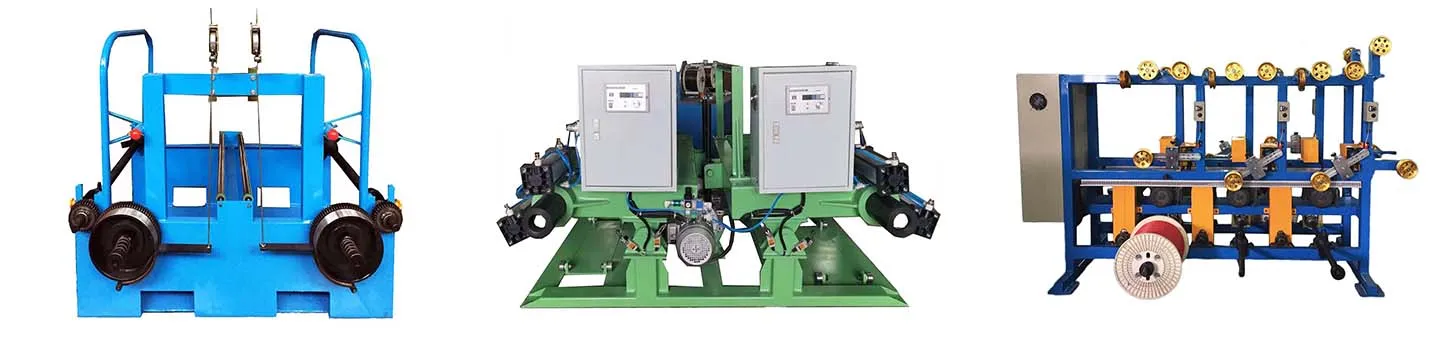
  • Pay-Off Systems: Uneven strand feed causes tension fluctuation and reduces layer bonding.

  • Calibration & Cooling: Maintain consistent geometry to prevent layer separation.

  • Take-Up / Coiling Machines: Must be matched to line speed and conductor diameter for optimal adhesion retention.

7. Material and Process Innovations


  • Tie Layers / Adhesives: Special polymer blends or functional layers enhance interlayer bonding.

  • Plasma or Corona Treatment: Increases surface energy for low-adhesion polymers.

  • Pre-Heating Layers: Ensures molten interface contact before solidification.

  • Digital Process Monitoring: Track melt pressure, screw torque, and tension in real time to detect potential adhesion problems early.


8. Why DXCableTech Lines Are Optimal for Multi-Layer EV Cable Production


  • Multi-Layer Extruders: Precise temperature and flow control for each layer.

  • Co-Extrusion Dies: Optimized geometry for uniform interface pressure.

  • Advanced Haul-Off & Take-Up: Servo-driven tension control ensures adhesion stability.

  • Calibration & Cooling Units: Multi-stage, temperature-controlled to prevent delamination.

These design principles allow consistent, high-quality adhesion, reduce scrap, and improve overall EV cable reliability.


9. Benefits of Optimized Adhesion


  • Enhanced dielectric performance and mechanical strength

  • Lower scrap rates and higher yields

  • Reduced downtime due to quality defects

  • Consistent outer diameter and concentricity for downstream processes

  • Reliable production of high-voltage EV cables for automotive and infrastructure applications

10. Conclusion


Adhesion in multi-layer EV cable insulation is not a single-component problem. It depends on:

  • Material compatibility and preparation

  • Precision extrusion and co-extrusion engineering

  • Controlled temperature, tension, and pull-off

  • Optimized calibration and cooling processes

DXCableTech offers integrated extrusion and auxiliary equipment solutions to solve adhesion issues systematically, enabling high-quality, reliable EV cable production at scale.


We use cookie to improve your online experience. By continuing to browse this website, you agree to our use of cookie.
Cookies
Please read our Terms and Conditions and this Policy before accessing or using our Services. If you cannot agree with this Policy or the Terms and Conditions, please do not access or use our Services. If you are located in a jurisdiction outside the European Economic Area, by using our Services, you accept the Terms and Conditions and accept our privacy practices described in this Policy.
We may modify this Policy at any time, without prior notice, and changes may apply to any Personal Information we already hold about you, as well as any new Personal Information collected after the Policy is modified. If we make changes, we will notify you by revising the date at the top of this Policy. We will provide you with advanced notice if we make any material changes to how we collect, use or disclose your Personal Information that impact your rights under this Policy. If you are located in a jurisdiction other than the European Economic Area, the United Kingdom or Switzerland (collectively “European Countries”), your continued access or use of our Services after receiving the notice of changes, constitutes your acknowledgement that you accept the updated Policy. In addition, we may provide you with real time disclosures or additional information about the Personal Information handling practices of specific parts of our Services. Such notices may supplement this Policy or provide you with additional choices about how we process your Personal Information.


Cookies

Cookies are small text files stored on your device when you access most Websites on the internet or open certain emails. Among other things, Cookies allow a Website to recognize your device and remember if you've been to the Website before. Examples of information collected by Cookies include your browser type and the address of the Website from which you arrived at our Website as well as IP address and clickstream behavior (that is the pages you view and the links you click).We use the term cookie to refer to Cookies and technologies that perform a similar function to Cookies (e.g., tags, pixels, web beacons, etc.). Cookies can be read by the originating Website on each subsequent visit and by any other Website that recognizes the cookie. The Website uses Cookies in order to make the Website easier to use, to support a better user experience, including the provision of information and functionality to you, as well as to provide us with information about how the Website is used so that we can make sure it is as up to date, relevant, and error free as we can. Cookies on the Website We use Cookies to personalize your experience when you visit the Site, uniquely identify your computer for security purposes, and enable us and our third-party service providers to serve ads on our behalf across the internet.

We classify Cookies in the following categories:
 ●  Strictly Necessary Cookies
 ●  Performance Cookies
 ●  Functional Cookies
 ●  Targeting Cookies


Cookie List
A cookie is a small piece of data (text file) that a website – when visited by a user – asks your browser to store on your device in order to remember information about you, such as your language preference or login information. Those cookies are set by us and called first-party cookies. We also use third-party cookies – which are cookies from a domain different than the domain of the website you are visiting – for our advertising and marketing efforts. More specifically, we use cookies and other tracking technologies for the following purposes:

Strictly Necessary Cookies
These cookies are necessary for the website to function and cannot be switched off in our systems. They are usually only set in response to actions made by you which amount to a request for services, such as setting your privacy preferences, logging in or filling in forms. You can set your browser to block or alert you about these cookies, but some parts of the site will not then work. These cookies do not store any personally identifiable information.

Functional Cookies
These cookies enable the website to provide enhanced functionality and personalisation. They may be set by us or by third party providers whose services we have added to our pages. If you do not allow these cookies then some or all of these services may not function properly.

Performance Cookies
These cookies allow us to count visits and traffic sources so we can measure and improve the performance of our site. They help us to know which pages are the most and least popular and see how visitors move around the site. All information these cookies collect is aggregated and therefore anonymous. If you do not allow these cookies we will not know when you have visited our site, and will not be able to monitor its performance.

Targeting Cookies
These cookies may be set through our site by our advertising partners. They may be used by those companies to build a profile of your interests and show you relevant adverts on other sites. They do not store directly personal information, but are based on uniquely identifying your browser and internet device. If you do not allow these cookies, you will experience less targeted advertising.

How To Turn Off Cookies
You can choose to restrict or block Cookies through your browser settings at any time. Please note that certain Cookies may be set as soon as you visit the Website, but you can remove them using your browser settings. However, please be aware that restricting or blocking Cookies set on the Website may impact the functionality or performance of the Website or prevent you from using certain services provided through the Website. It will also affect our ability to update the Website to cater for user preferences and improve performance. Cookies within Mobile Applications

We only use Strictly Necessary Cookies on our mobile applications. These Cookies are critical to the functionality of our applications, so if you block or delete these Cookies you may not be able to use the application. These Cookies are not shared with any other application on your mobile device. We never use the Cookies from the mobile application to store personal information about you.

If you have questions or concerns regarding any information in this Privacy Policy, please contact us by email at . You can also contact us via our customer service at our Site.