Русский
 Türkçe
 Tiếng Việt
Selecting the right cable production equipment is not just about buying a machine—it’s about ensuring your production line delivers consistent quality, efficiency, and long-term reliability. Many manufacturers struggle with choosing the correct machinery because different cable types have specific requirements that affect speed, stability, and overall cost. This guide breaks down the factors you need to consider, comparing machine types, production techniques, and common challenges, so you can make an informed decision for your factory.
Understanding Cable Types and Their Production Requirements
The first step in equipment selection is understanding the type of cable you produce. Each cable type has unique characteristics that dictate machinery choice, setup, and operational parameters.
1. Power Cables
Power cables, including low, medium, and high-voltage types, often require:
High conductor quality: Copper or aluminum conductors must meet tight electrical resistance standards.
Precise insulation: Uniform thickness and consistent electrical properties are crucial.
Flexibility in production: Machines must handle various cross-sectional areas efficiently.
Equipment Considerations:
Extruders: Single or double extruders with precise screw design for PVC, XLPE, or LSZH insulation.
Stranding machines: Capable of producing 1×7, 1×19, or multi-layered conductors with minimal vibration.
Pullers and cooling systems: Adjustable puller speed and optimized cooling water flow prevent deformation or internal voids.
Pro Tip: Choosing a machine with adjustable tension settings can prevent strand misalignment, especially when producing larger cross-section power cables.
2. Communication Cables
Communication cables, such as twisted-pair, coaxial, or fiber optic, require high precision and minimal mechanical stress:
Dimensional consistency: Small variations in diameter can affect signal quality.
High-speed production: Large-scale deployments demand fast production without sacrificing quality.
Low mechanical stress: Especially critical for fiber optic cores or delicate shielding layers.
Equipment Considerations:
High-speed stranding machines: Ensure consistent tension to avoid conductor deformation.
Precision cablers: Automated tension and twist control for maintaining exact pitch.
Inline testing stations: Allow real-time measurement of impedance, attenuation, and diameter to ensure quality.
Pro Tip: For twisted-pair cables, the difference of 0.01 mm in twist pitch can drastically affect signal integrity, so tension-controlled cablers are essential.
3. Specialty Cables
Specialty cables are designed for automotive, data centers, renewable energy, or harsh environments. They often involve complex structures or unique materials:
Multiple layers of insulation or shielding.
Specific mechanical, thermal, or flame-retardant properties.
Compliance with industry standards like UL, IEC, or RoHS.
Equipment Considerations:
Modular machines: Allow quick configuration changes for different cable structures.
Multi-material extruders: Handle dual-layer insulation or shielding with minimal downtime.
Advanced cooling and take-up systems: Protect sensitive materials and maintain product geometry.
Pro Tip: Specialty cables often require slower speeds during layer transitions. Machines with programmable speed profiles can prevent defects like voids or uneven coatings.
Matching Machine Parameters to Cable Production
Selecting equipment isn’t just about type—it’s about specific parameters. Understanding these parameters can prevent mistakes that lead to scrap, downtime, or low efficiency.
Key Parameters:
Line Speed vs Stability:
High-speed machines increase output but may introduce tension variations.
Stability-focused machines produce more consistent quality but may sacrifice speed.
Decision factor: Choose based on production volume, cable type, and customer tolerance levels.
Pulling Force and Tension Control:
Too high tension can stretch insulation; too low causes slack or strand misalignment.
Machines with real-time tension feedback loops improve consistency, especially for long cables.
Material Compatibility:
Different insulation materials behave differently:
PVC: Flexible, easy to extrude, lower cooling requirements.
XLPE: Requires higher extrusion temperature, longer cooling path.
LSZH: Sensitive to heat; improper screw design can cause voids.
Select machines designed to handle your intended materials to reduce downtime.
Die and Tooling Options:
Quick-change dies reduce setup time between product runs.
High-quality tooling improves insulation smoothness and conductor positioning.
Common Challenges and Solutions in Equipment Matching
Challenge 1: Multiple Cable Types on One Line
Problem: Switching from power cable to communication cable can cause long setup times and quality variations.
Solution: Use modular lines with programmable settings and multi-diameter capabilities.
Challenge 2: Material Changeovers
Problem: Changing insulation material often causes voids or inconsistent thickness.
Solution: Optimize extruder temperature, screw speed, and cooling for each material type. Track settings for repeatable performance.
Challenge 3: Tension Management
Problem: High-speed lines can stretch or deform delicate cables.
Solution: Install tension-controlled pullers and real-time monitoring systems to maintain uniformity.
Equipment Decision Table
| Cable Type | Recommended Machines | Critical Parameters | Production Tip |
|---|---|---|---|
Power Cable | Single/Double Extruder + Stranding | Conductor size, insulation thickness, tension | Adjust puller speed for large cross-sections |
Communication Cable | High-speed Cabler + Twisting Machine | Twist pitch, tension, line speed | Use real-time testing for impedance/attenuation |
Specialty Cable | Modular Production Line | Layer transition speed, material type | Pre-program machine profiles for each product |
Final Thoughts
Choosing the right cable equipment is a balance of cable type, production goals, material compatibility, and machine capability. Deep understanding of machine parameters, material behavior, and production techniques ensures higher efficiency, lower scrap, and consistent quality.
Next Step for Buyers: If you’re evaluating cable machines or optimizing an existing line, our team provides customized solutions based on your product portfolio and production requirements. Contact us today to discuss your specific needs and discover which machines are best for your factory.
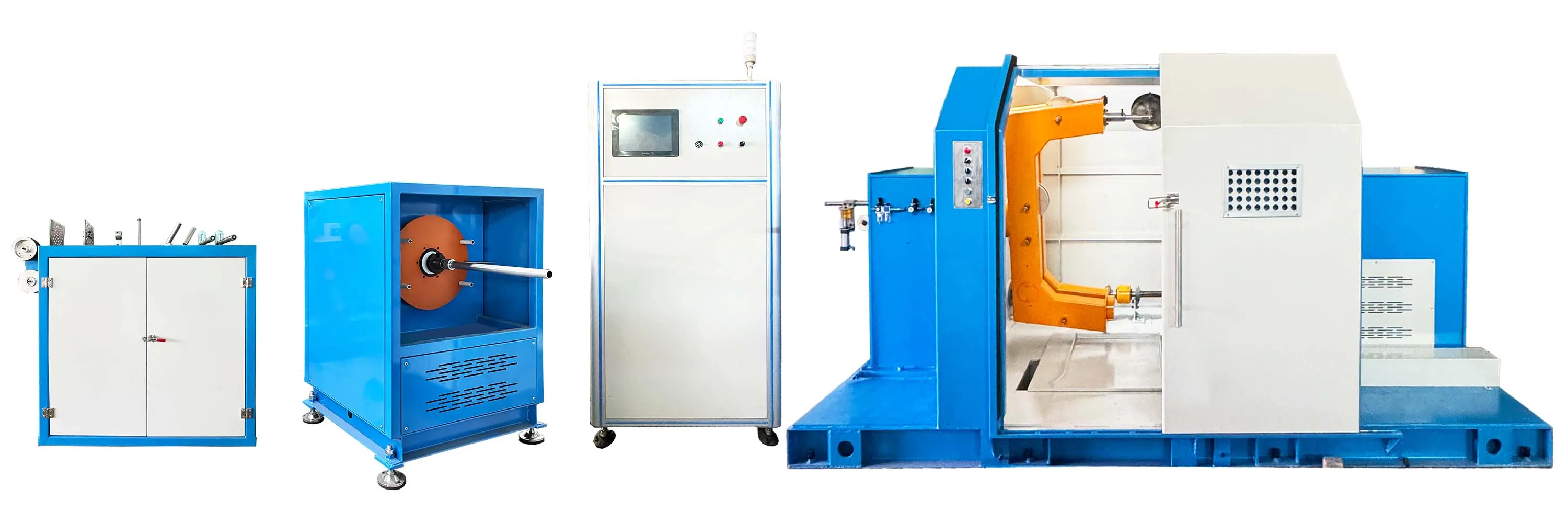
Explore the complete cable manufacturing system:
→ Cable Manufacturing Process & Equipment Guide