Русский
 Türkçe
 Tiếng Việt
Strander wire deformation is one of the most common problems in modern cable manufacturing. At first glance, it may seem like a minor cosmetic issue, but in reality, any deformation impacts final cable geometry, electrical performance, and mechanical stability. For high-speed stranding lines, even a slight wire bend, ovalization, or twist misalignment can propagate downstream, causing taping issues, uneven lay length, or reduced tensile strength.
Understanding why wire deforms and how to prevent it systematically is critical for any production facility aiming for consistency, efficiency, and high-quality cable output.
1. Identify the Root Causes of Wire Deformation
Wire deformation can occur at multiple stages in the stranding process. The main contributors are:
1.1 Material Properties
Wire hardness and ductility: Softer wires are prone to bending or ovalization under tension, while overly brittle wires may crack.
Surface condition: Oxidation, roughness, or micro-scratches increase local stress and lead to deformation during twisting.
Wire diameter variation: Non-uniform wire diameters can cause uneven tension in the strander, promoting bends or kinks.
1.2 Machine Settings
Excessive rotational speed: High-speed stranding increases centrifugal forces, which can bend or ovalize wires.
Improper tension control: Too low tension allows wire slack, too high tension stretches or flattens the wire.
Rotor misalignment: An unbalanced rotor or misaligned stranding head applies uneven forces, causing localized deformation.
1.3 Handling and Pay-Off Issues
Poor spool alignment: Pay-off reels installed off-center or with wobble create tension fluctuations.
Guide misalignment: Every deviation in wire guides can introduce small bends, which accumulate downstream.
Abrupt direction changes: Excessive wire bending at entry or exit points increases plastic deformation.
2. Control Tension Across the Stranding Line
Tension management is the single most important factor in preventing wire deformation.
2.1 Dancer Arm Optimization
The dancer must absorb minor tension variations smoothly.
A poorly calibrated dancer causes tension spikes, which deform soft or thin wires.
2.2 Pay-Off Brakes
Use magnetic or pneumatic brakes for stable and adjustable resistance.
Avoid friction-based brakes that introduce sudden torque jumps.
2.3 Tension Monitoring
Install inline tension sensors before and after the strander rotor.
Monitor both static and dynamic tension to detect fluctuations early.
3. Ensure Machine Alignment and Rotor Balance
3.1 Rotor Dynamic Balancing
Even minor imbalance leads to cyclic bending forces on wires.
Check bearing wear, rotor concentricity, and clamp alignment regularly.
3.2 Guide and Die Alignment
All wire guides must form a straight path into the rotor.
Misalignment even by 0.2–0.5 mm can induce permanent bends, especially in soft wires.
3.3 Leveling and Foundation
Strander machines must sit on a vibration-free, level foundation.
Mechanical vibration amplifies deformation at high-speed operations.
4. Optimize Wire Material and Surface Quality
4.1 Select Appropriate Wire Hardness
Too soft → bends and kinks.
Too hard → cracks and reduced flexibility.
Consult your wire supplier for annealing and temper specifications suitable for stranding.
4.2 Surface Finish
Polished wires reduce friction in guides and dies.
Oxidation layers should be removed or controlled to avoid stress concentration.
4.3 Consistent Wire Diameter
Use precision-rolled wire with minimal tolerance.
Variations create uneven strain across the rotor, inducing deformation.
5. Optimize Operational Parameters
5.1 Rotor Speed
Excessive speed increases centrifugal forces.
Determine maximum RPM based on wire diameter, material, and rotor radius.
5.2 Lay Length
Adjust lay length to minimize wire bending stress.
Longer lay lengths reduce internal strain but may affect cable flexibility.
5.3 Multi-Strand Configurations
For multiple layers, ensure tension balancing across layers.
Incorrect layering can flatten wires in inner layers.
6. Preventive Maintenance and Monitoring
Daily checks: Inspect wire guides, rotor balance, bearings, and pay-off alignment.
Lubrication: Properly lubricated guides reduce friction-induced bending.
Vibration analysis: Identify early signs of rotor misalignment or foundation resonance.
Training operators: Experienced operators notice minor wire behavior changes before major deformation occurs.
7. Validation and Quality Control
Inspect wire diameter and shape before and after stranding.
Use high-speed cameras or inline sensors to detect ovalization in real time.
Track statistical process control (SPC) data to identify trends leading to deformation.
Regularly compare finished cable properties (tensile strength, lay consistency) with design specifications.
Conclusion
Preventing strander wire deformation is a multi-faceted challenge that combines:
Material selection (hardness, ductility, surface finish)
Precision machine setup (tension, rotor balance, guide alignment)
Process control (rotor speed, lay length, tension monitoring)
Preventive maintenance and inspection
By addressing all these aspects systematically, cable manufacturers can maximize production efficiency, reduce scrap, and ensure consistent cable quality.
At DX CableTech, we support OEMs and harness manufacturers by providing technical guidance, strander setup optimization, and process monitoring strategies to eliminate wire deformation at the source.
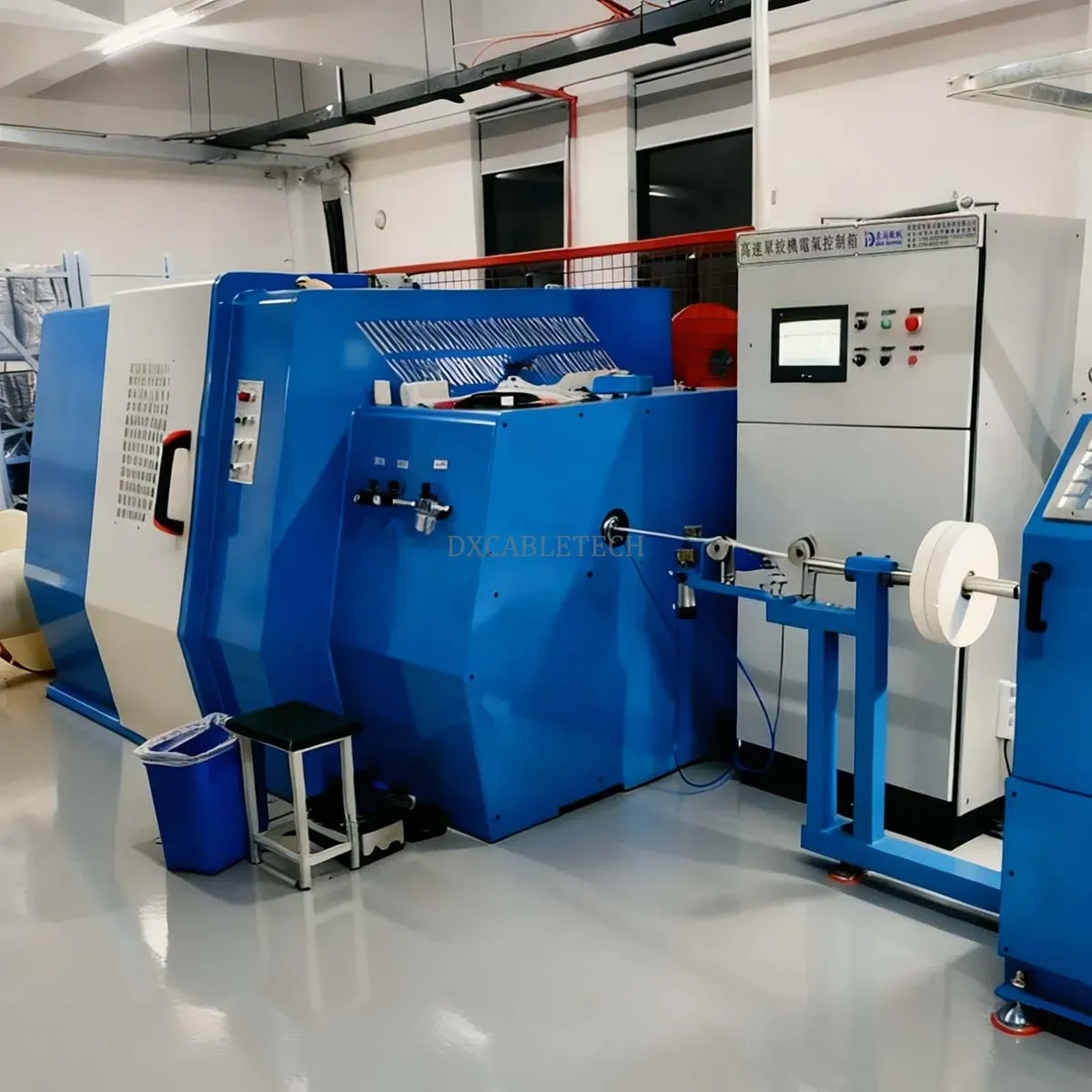
Explore the complete cable manufacturing system:
→ Cable Manufacturing Process & Equipment Guide