Русский
 Türkçe
 Tiếng Việt
Last quarter, a mid-sized cable factory in Vietnam faced a dilemma: their 10-year-old extrusion line still ran, but maintenance costs were climbing, scrap rates were rising, and production wasn’t keeping up with new orders. Management asked the obvious question: Should we upgrade to a new line or optimize the existing one?
This is a common scenario in the cable manufacturing world. Deciding whether to invest in new machinery or continue with older lines is not just about the age of the equipment—it’s about efficiency, quality, cost, and long-term production goals.
Why Some Factories Keep Old Machines
Many manufacturers stick with old machines because:
Initial cost avoidance: Buying new cable machinery can be expensive.
Operator familiarity: Experienced staff know how to run and maintain old lines.
Perceived adequacy: Some lines still meet current production targets.
But these benefits often come with hidden costs:
Higher scrap rates: Older machines can struggle to maintain tight tolerances, especially with complex insulation or multi-strand cables.
Increased downtime: Parts wear out more frequently, and finding replacements may be slow or costly.
Energy inefficiency: Older extruders, pullers, and cooling systems consume more power per meter of cable.
Mini-case: A factory running a 12-year-old PVC extrusion line noticed scrap rates creeping up to 5%, compared to 1–2% on a modern line with updated screw design and tension control. Over a year, the extra material cost outweighed the capital cost of a new line.
Signs It’s Time to Upgrade
Instead of relying solely on the machine’s age, consider these key indicators:
1. Productivity Bottlenecks
Production speed is capped by mechanical or control limitations.
Downtime for maintenance or setup changes is frequent.
2. Quality Inconsistency
Difficulty maintaining diameter, insulation thickness, or strand alignment.
Frequent product rejections or returns from clients.
3. Energy and Maintenance Costs
Older lines often consume 15–25% more electricity.
Repeated replacement of worn screws, dies, or bearings adds to operational cost.
4. Changing Product Requirements
New cable types or materials require capabilities the old machine cannot support.
Multi-layer or specialty cables may be impossible to produce reliably.
Rule of thumb: If more than 2–3 of these issues occur simultaneously, it’s worth seriously evaluating an upgrade.
Advantages of Modern Cable Machinery
New machinery brings more than just speed. Key benefits include:
1. Higher Efficiency
Advanced extruders with optimized screw profiles reduce cycle times.
Integrated tension control and cooling systems improve throughput without sacrificing quality.
2. Improved Quality and Consistency
Real-time monitoring reduces scrap rates.
Precision control ensures uniform insulation thickness, strand alignment, and twist pitch.
3. Flexibility
Modular lines allow quick changeovers between cable types.
Can handle new materials (XLPE, LSZH, multi-layer shielding) with minimal adjustments.
4. Lower Total Cost of Ownership (TCO)
Energy savings and reduced scrap offset initial investment.
Fewer emergency repairs and downtime reduce operational disruption.
Mini-case: A European manufacturer replaced a 15-year-old medium-voltage XLPE line. Production speed increased by 20%, scrap fell from 4% to 1.5%, and energy consumption dropped 18%. The ROI was achieved in under two years.
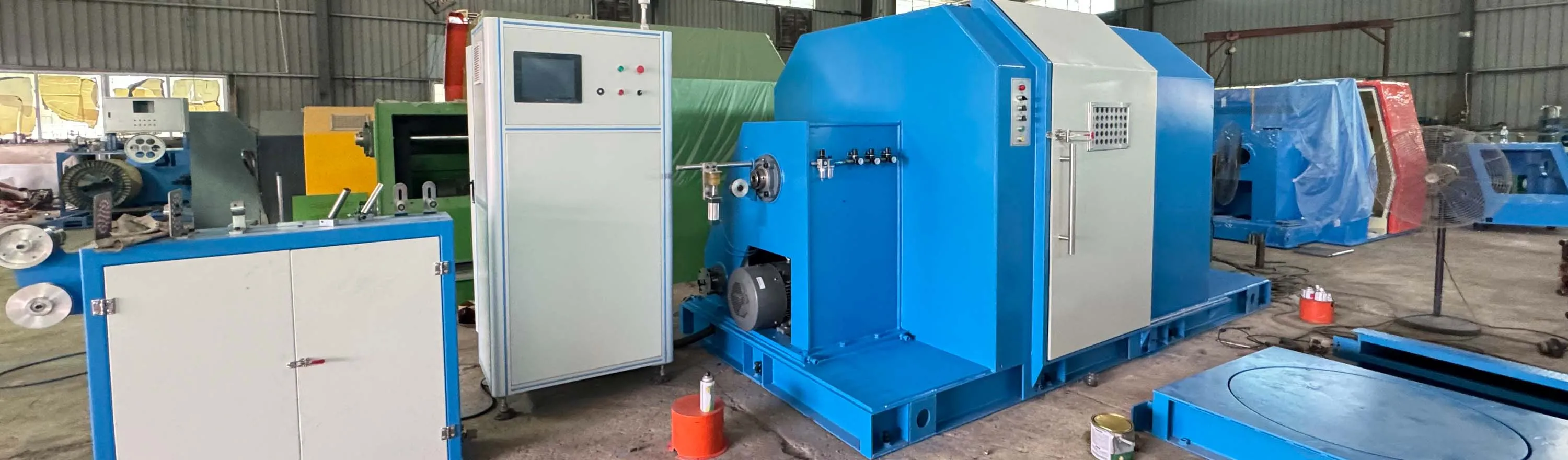
When Optimizing Old Machinery Is the Right Choice
Not every old machine needs to be replaced. Sometimes upgrades or retrofits can extend the line’s life and improve performance. Options include:
Control system modernization: Upgrading PLCs, integrating tension feedback, and adding automation features.
Mechanical retrofits: Replacing worn screws, dies, pullers, and cooling components.
Material handling improvements: Adding better insulation calibration or inline testing systems.
Example: A factory upgraded a 10-year-old stranding machine with a modern tension control system and inline diameter sensors. Scrap dropped by 30%, and production improved without purchasing a completely new line.
Key takeaway: Optimizing makes sense when the core mechanical structure is sound, and you’re not switching to new cable types or drastically increasing output.
Decision-Making Framework
Here’s a practical approach to decide between upgrading or replacing:
| Factor | Upgrade Old Line | Buy New Line | Notes |
|---|---|---|---|
Production Volume | Moderate | High or increasing | New machines handle higher volumes with less scrap |
Product Complexity | Low–Moderate | High | Specialty cables often require new lines |
Energy Efficiency | Moderate | High | Energy savings may justify new investment |
Maintenance Cost | Medium | Low | New machines reduce downtime and repair frequency |
ROI Timeline | Short | Medium | Retrofits are quicker; new lines take longer but longer-term benefit |
Practical Tips for Buyers
Measure real production KPIs – Track scrap, downtime, energy usage, and throughput for 3–6 months before deciding.
Estimate upgrade vs new costs – Include hidden costs like downtime, scrap, and training.
Consider future product mix – New cable types or materials often necessitate new machinery.
Check vendor support – For retrofits, ensure spare parts and service are available for older models.
Plan phased upgrades – Sometimes replacing one line first while optimizing others minimizes disruption.
Conclusion
Upgrading cable machinery is about more than age—it’s about efficiency, quality, and long-term competitiveness. Old lines can still be productive with retrofits, but if scrap, downtime, or new product demands are increasing, investing in new equipment is usually worth it.
Next Step for Buyers: Evaluate your lines using measurable KPIs, consult with experienced vendors, and weigh upgrade vs replacement in terms of ROI, efficiency, and future production needs. Contact us today for a personalized assessment and solution recommendation for your factory.
Explore the complete cable manufacturing system:
→ Cable Manufacturing Process & Equipment Guide