Русский
 Türkçe
 Tiếng Việt
The Market Looks Calm. Inside Factories, It Doesn’t.
If you only look at global demand charts, the wire and cable industry between 2025 and 2030 appears predictable. Demand continues to rise, infrastructure investment remains strong, and new applications—from energy storage to data centers—seem to promise another stable growth cycle.
But inside cable manufacturing plants, the situation feels far less straightforward.
Production schedules are fuller, yet margins are tighter. Product ranges are expanding, but planning has become harder. Machines are running longer hours, while operators and engineers spend more time adjusting, troubleshooting, and coordinating than actually increasing output.
The contradiction is clear: the market looks stable, but manufacturing is becoming more fragile.
Understanding why requires looking beyond demand volume and into how that demand is changing the structure of production itself.
Demand Is Growing, but Not in a Simple Way
Yes, global cable demand is increasing. Power infrastructure upgrades, renewable energy projects, electric vehicles, data centers, and communication networks all contribute to steady growth.
The issue is not whether demand exists—it clearly does.
The issue is how uneven and fragmented that demand has become.
A single manufacturer may now be asked to produce:
High-volume power cables with tight delivery schedules
Low-volume, high-spec data or industrial cables
Project-based orders with unique material or standard requirements
On paper, total output may increase year over year. In practice, factories are juggling more cable types, more changeovers, and more exceptions than ever before.
Growth, in other words, is no longer coming in neat blocks. It is coming in layers.
The Quiet Shift: Standardization Is Declining
One of the most important changes between now and 2030 is rarely stated directly: true standardization is slowly declining.
Cable designs may still follow familiar frameworks, but the acceptable tolerance range is shrinking. Customers specify more details. Standards vary by region. Compliance requirements overlap rather than align.
What used to be “good enough” is increasingly not enough.
For manufacturers, this creates a subtle but serious problem. Systems that were optimized for long runs of similar products struggle when:
Specifications change frequently
Quality margins tighten
Rework becomes more costly than ever
This is not a short-term fluctuation. It is a structural change that affects how production lines are designed, operated, and upgraded.
Regional Differences Are About Difficulty, Not Just Growth
Much industry discussion focuses on which regions are growing fastest. For manufacturers, however, the more relevant question is where production is becoming harder.
As tolerance requirements continue to shrink, material-related stability issues in cable manufacturing are becoming more visible and harder to ignore.
In emerging markets, capacity expansion remains the priority. Volume matters, and speed to market is often decisive.
In developed markets, the challenge is different. Smaller batch sizes, stricter standards, and more frequent audits push manufacturers to prioritize consistency and traceability over raw output.
Export-oriented factories often face the greatest pressure. Serving multiple regions means meeting different standards on the same production floor—sometimes on the same day.
The result is a widening gap between installed capacity and effective, compliant capacity.

Growth Drivers Are Converging at the Factory Level
Between 2025 and 2030, three major forces will continue reshaping the industry:
Electrification
Power grids are expanding, but they are also becoming more technically demanding. Fire resistance, insulation performance, and long-term reliability matter more than ever.
Digital infrastructure
High-speed data transmission places pressure on dimensional accuracy, shielding quality, and process control. Small deviations now have visible performance consequences.
Sustainability and regulation
Environmental requirements affect material choices, waste handling, and energy efficiency—often without reducing cost pressure or delivery expectations.
These drivers originate in different markets, but they converge in one place: the manufacturing system.
Complexity, Not Volume, Is the Real Challenge
Historically, cable manufacturing challenges were volume-driven. The question was whether factories could scale fast enough.
Today, the challenge is different. Complexity is rising faster than volume.
More product variants mean:
More setup adjustments
More dependency on operator experience
Greater sensitivity to process instability
Many factories discover that their limitations are not mechanical, but systemic. Machines may still function well, yet the overall production system becomes harder to manage as variation increases.
This is why scrap rates, downtime, and delivery delays often rise even when demand is strong.
Manufacturing Systems Are Aging Faster Than Machines
One of the most misunderstood trends in the industry is equipment “aging.”
In many factories, machines are not physically obsolete. What ages faster is the production logic built around them.
Systems designed for stable, repetitive output struggle when required to:
Switch specifications frequently
Maintain consistency across smaller batches
Integrate quality data across processes
This explains why many manufacturers face a difficult decision: whether to upgrade equipment or optimize existing lines. The question is no longer purely technical—it is structural.
Data and Stability Are Becoming Competitive Advantages
Between 2025 and 2030, speed alone will not define competitiveness.
Manufacturers that gain an edge will be those that:
Maintain stable processes across product changes
Capture and use production data effectively
Reduce dependency on manual correction and experience-based adjustments
Data logging, traceability, and process visibility are no longer optional tools. They are becoming foundational elements of modern cable manufacturing systems.
What This Outlook Really Means for Manufacturers
The next five years will not reward manufacturers who expand capacity without addressing complexity.
Growth will favor those who understand where instability enters their production system—and take steps to manage it before it becomes visible in quality issues or missed deliveries.
In a market that looks calm from the outside, manufacturing discipline will quietly separate leaders from followers.
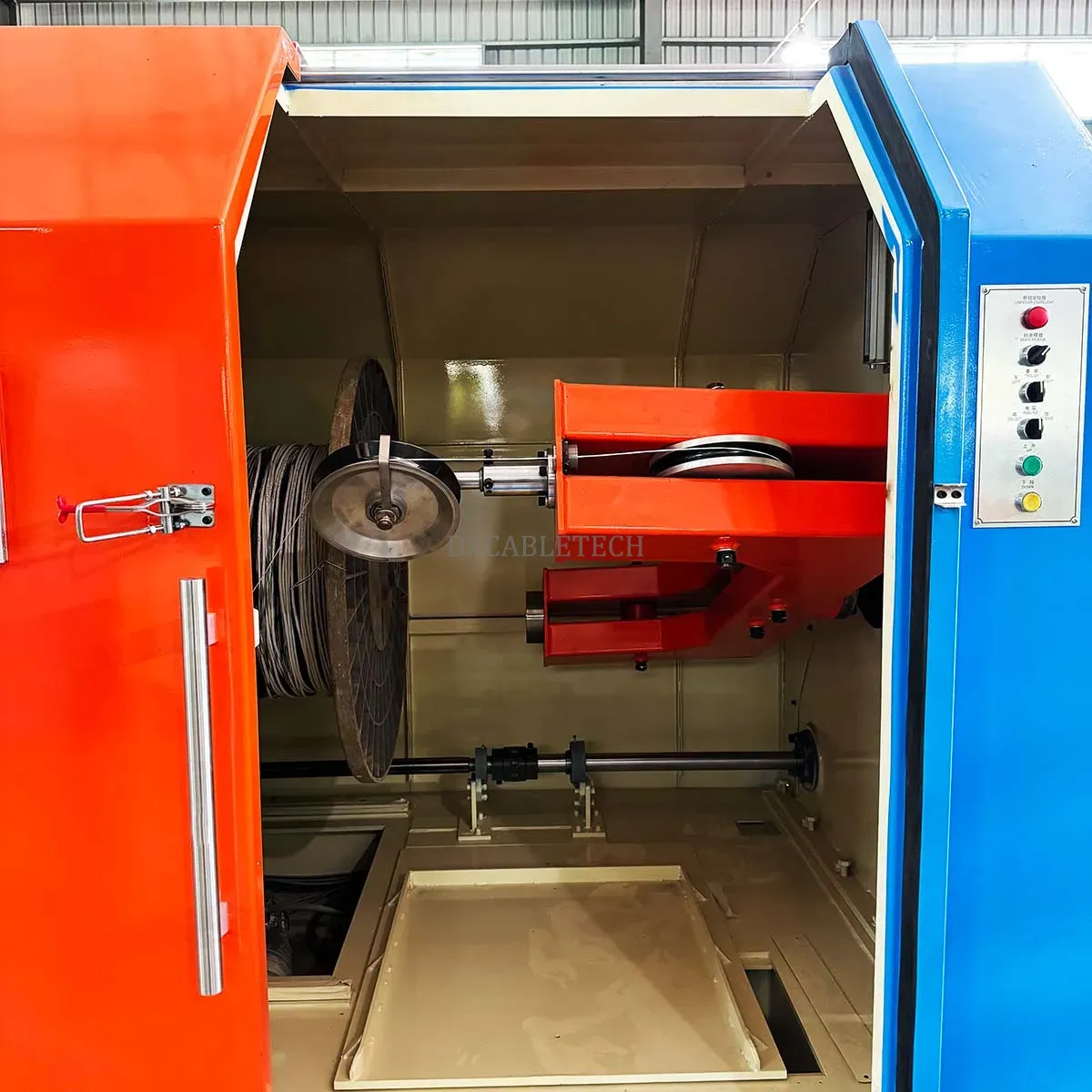
Explore the complete cable manufacturing system:
→ Cable Manufacturing Process & Equipment Guide