Русский
 Türkçe
 Tiếng Việt

In cable manufacturing, scrap material is one of the most persistent challenges. Even a small percentage of defective cable can result in substantial material loss, increased production costs, and reduced overall efficiency. While new machines promise higher precision, the reality is that most factories cannot justify the capital investment. Fortunately, by optimizing existing processes, improving operator expertise, and implementing precise quality control, cable factories can drastically reduce scrap without replacing machinery.
1. Understanding the Types and Causes of Scrap
Scrap in cable manufacturing generally falls into three categories:
1.1 Conductor-related scrap
Broken strands or uneven stranding due to improper tension or misaligned stranding heads.
Surface defects or contamination caused by improper handling or substandard materials.
1.2 Insulation-related scrap
Irregular thickness, voids, or bubbles caused by extrusion inconsistencies.
Overheating or under-curing of insulation material (PVC, XLPE, PE).
1.3 Process and handling scrap
Improper winding, puller tension issues, and handling damage during take-up or storage.
A detailed scrap log is essential. Factories should categorize scrap by type, location, and batch, creating a baseline to target improvement measures effectively. Studies show that properly analyzed scrap logs can help reduce total scrap by 20–30% without equipment replacement.
2. Extrusion Parameter Optimization
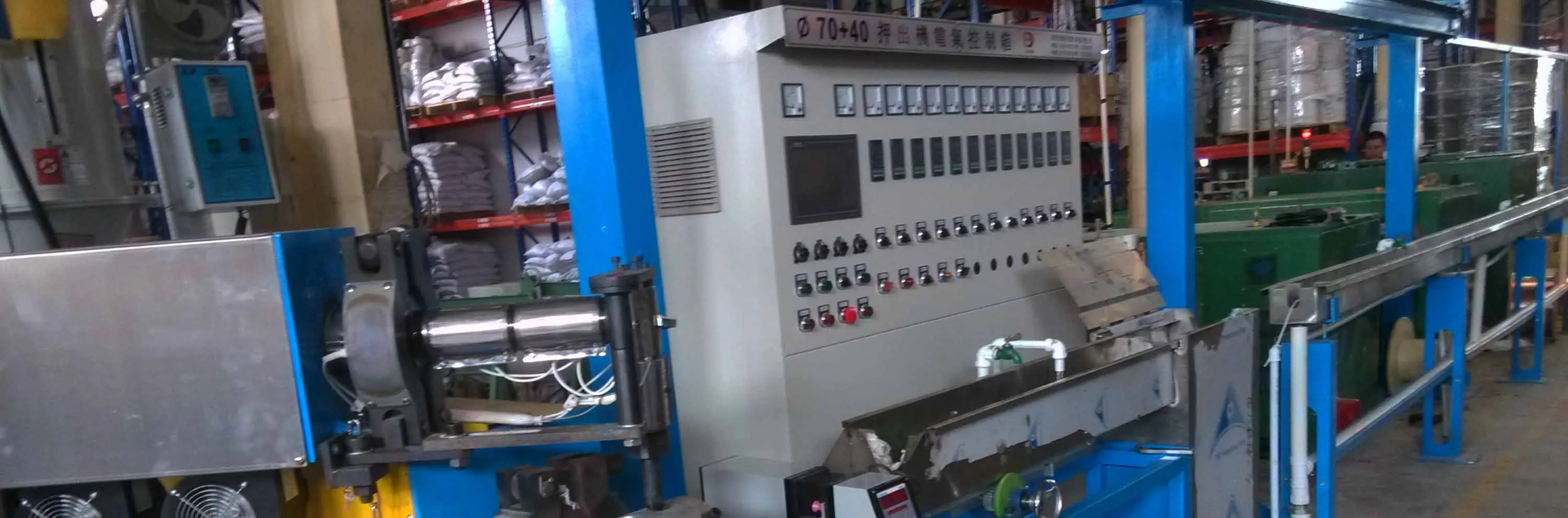
The extrusion process is critical in determining insulation quality. Most scrap in MV and LV cable production stems from minor inconsistencies in extrusion.
2.1 Temperature control
PVC extrusion: 180–210°C; XLPE extrusion: 120–150°C.
Fluctuations as small as ±2°C can create bubbles or uneven thickness.
Solutions: Calibrated thermocouples at die lips, feedback-controlled heaters, and insulation of die heads to prevent heat loss.
2.2 Line speed management
Sudden acceleration/deceleration of the line can stretch or compress insulation, creating thin spots or bulges.
Solution: Implement gradual ramp-up and ramp-down of puller and haul-off speeds. For MV cables, maintaining line speed within ±0.5 m/min can reduce scrap by 10–15%.
2.3 Die maintenance and calibration
Regular inspection for wear, debris, or polymer buildup prevents air pockets and uneven extrusion.
Even minor misalignment (<0.2 mm) can cause insulation defects on high-voltage cables.
Cleaning schedule: Weekly for high-production lines, with daily visual checks during operation.
3. Conductor Stranding and Tension Control
Defects often originate upstream in the conductor process. Proper stranding and tension control prevent downstream insulation issues.
3.1 Tension monitoring
Use load cells or tension sensors on pay-off reels and stranding units.
Maintain conductor tension within ±3% of target to prevent strand breakage.
3.2 Stranding head alignment
Misalignment of stranding heads can cause uneven surface contact, resulting in insulation bubbles or voids.
Solution: Weekly alignment verification with laser or dial indicators.
3.3 Operator intervention
Skilled operators can detect conductor irregularities early, preventing scrap accumulation.
Regular training on identifying subtle conductor defects improves yield significantly.
4. Inline Quality Monitoring
Factories increasingly adopt inline monitoring systems as a cost-effective alternative to replacing machines:
Laser/optical gauges: Measure insulation thickness in real-time to detect deviations.
Video inspection systems: Identify surface bubbles, contamination, or discoloration.
Feedback loops: Automatically adjust extrusion speed or die temperature when defects are detected.
Implementing inline monitoring can reduce scrap from 5–8% to under 3% in just a few months.
5. Preventive Maintenance Strategies
Most scrap caused by equipment issues can be mitigated without buying new machines. Preventive maintenance includes:
Lubrication: Keep bearings, gears, and moving parts operating smoothly.
Alignment checks: Rollers, dies, stranding heads, and pullers must be precisely aligned.
Scheduled downtime: Regular calibration of dies, pullers, and haul-offs reduces subtle mechanical errors that lead to scrap.
Studies indicate that preventive maintenance alone can reduce scrap by up to 15%, depending on equipment age and usage.
6. Material Handling and Storage
Scrap can occur even before raw materials enter production:
Conductors: Store in controlled humidity and temperature to prevent corrosion or oxidation.
Insulation compounds: Maintain temperature-controlled silos and avoid contamination.
Reel handling: Prevent kinking or bending during transport and storage.
Proper material handling ensures fewer defects originate from raw materials.
7. Operator Training and Standard Procedures
Human error is a major contributor to scrap. Solutions include:
SOPs for machine setup: Ensure each line starts with consistent settings.
Regular operator training: Teach defect identification, quick troubleshooting, and adjustment techniques.
Visual inspection protocols: Early detection of bubbles, voids, or surface imperfections prevents entire batch losses.
A skilled operator can reduce scrap by 5–10% on a single line, often exceeding the gains from small equipment upgrades.
8. Recycling and Material Recovery
Even with optimized processes, some scrap is unavoidable. Efficient recycling strategies help reduce net material loss:
Regrinding defective insulation: Reuse in lower-grade products or temporary solutions.
Metal recovery: Melt and reform copper or aluminum conductors for future batches.
Segregation of scrap types: Allows targeted recycling, preserving material integrity.
An effective recycling program can recover up to 70% of scrap material, reducing both cost and environmental impact.
9. Case Study: Southeast Asian MV Cable Factory
A mid-sized MV cable factory in Thailand implemented a combined process optimization program without purchasing new machines:
Fine-tuned extrusion temperature and line speed.
Added inline laser thickness gauges and video inspection systems.
Strengthened operator training and SOP enforcement.
Introduced preventive maintenance schedule and die cleaning protocols.
Within six months, scrap rate dropped from 6% to 2.3%. Material costs were reduced by 18%, and production efficiency increased by 12%, proving that targeted process improvements can rival the impact of new machines.
10. Industry Trends Supporting Scrap Reduction
Beyond immediate factory practices, broader trends reinforce the focus on scrap reduction:
Sustainability mandates: Lowering scrap aligns with environmental compliance and corporate ESG goals.
Material cost volatility: Copper and polymer prices remain unpredictable; reducing scrap mitigates exposure.
Lean manufacturing adoption: Global cable manufacturers are integrating lean principles, focusing on yield improvement and waste reduction.
Digitalization: Smart factories are increasingly capable of real-time defect detection, predictive maintenance, and process optimization.
Conclusion
Reducing scrap in cable manufacturing does not require purchasing new machinery. By analyzing scrap causes, optimizing extrusion parameters, controlling conductor quality, implementing inline monitoring, conducting preventive maintenance, training operators, and recycling materials, factories can achieve significant efficiency gains.
Targeted process improvements not only reduce material loss but also improve product consistency, production capacity, and profitability. For modern cable manufacturers, process refinement and operator expertise are more impactful than costly equipment replacement, providing a sustainable, scalable path to higher yields.
Explore the complete cable manufacturing system:
→ Cable Manufacturing Process & Equipment Guide