Русский
 Türkçe
 Tiếng Việt

A technical field guide for cable plants upgrading to modern stranding systems
In many cable factories, production speed isn’t limited by extrusion, annealing, or payoff systems—it’s often limited by poor machinery layout. As global demand for EV cables, data cables, and flexible conductors accelerates, more factories are installing new buncher machine lines or upgrading legacy twisting equipment. But even the most advanced machine cannot reach its designed speed if the plant layout restricts tension control, airflow, bow dynamics, or operator access.
This industry report breaks down 10 essential layout strategies that engineering teams and procurement managers should consider before installing a new buncher line. These insights are drawn from field surveys, installation data, and real cases collected by equipment integrators including Dongguan Dongxin (DOSING) Automation Technology Co., Ltd., whose technical team has deployed hundreds of stranding systems across Asia and Europe.
More details about their equipment solutions can be found at DXCableTech.com.
Let’s dive into what truly determines whether your investment performs to spec.
1. Start With a Straight-Line Layout to Stabilize Strand Path
A buncher machine performs best when the conductor travels in a perfectly linear path—from payoff to take-up. Any offset angle introduces microscopic torsion, inconsistent lay length, and unnecessary friction.
Recommended design rules:
Keep payoff → pre-twist → tension controller → buncher → capstan → take-up in one line
Avoid L-shaped or S-shaped equipment placement
Reserve 1 to 1.5 meters of walk-through space on both ends
Many plants underestimate how much a simple straight path affects conductor roundness and speed stability, especially at 3,000–5,000 rpm.
2. Maintain a Clear Cable Entry Zone for Safe Bow Operation
The bow is the fastest-moving component in a modern stranding system. Any interference—air turbulence, obstruction, misplaced cables—can trigger vibration or even bow fatigue.
Your layout should guarantee:
At least 2 meters of unobstructed space around the bow chamber
No airflow blowing directly toward the bow (fans, AC units, or windows)
Cable trays positioned above the entry line, never crossing it
This also gives operators safe access during setup and prevents accidental contact during high-speed runs.
3. Ensure Proper Floor Leveling Before Installation
Many buncher machine vibration issues aren’t mechanical—they’re caused by uneven floors. Even a 3–5 mm height difference can induce gear misalignment, uneven bow load, or noise resonance.
Before installation:
Conduct a laser leveling survey
Grind or fill floor deviations
Install vibration pads only after measurement
A well-leveled base doesn’t just reduce noise—it extends bearing and spindle life.
4. Position Pay-Off Racks to Avoid Tension Spikes
In twisting systems, most strand breaks originate before the conductor reaches the buncher, not inside it. Improper payoff placement creates micro-jerks that escalate tension instantly.
To avoid this:
Place payoffs directly in front of the machine
Avoid long-distance wire feeding across other production lines
Ensure every payoff has aligned center height
Keep tension controllers within 1 meter of the entry sheave
For high-speed data cable or fine-gauge copper, this is non-negotiable.
5. Optimize Airflow and Cooling Around the Machine
Heat buildup increases bearing load, accelerates bow wear, and affects twisting torque consistency.
When planning your layout:
Keep the machine away from direct sunlight and heat sources
Install ceiling-based airflow instead of side-blowing fans
Maintain a constant room temperature (ideally 18–24°C)
Stable temperature = stable lay length.
6. Leave Maintenance Corridors Around Key Mechanisms
Production managers often regret the same mistake: they install the buncher machine too close to walls, pillars, or other machines. This makes bow replacement, lubrication checks, and gearbox inspection extremely difficult.
A proper layout reserves:
1 meter behind the electrical cabinet
1.5 meters on the operator side
0.8–1 meter on the transmission side
Clear overhead access for lifting the bow or rotor
Downtime is the most expensive hidden cost. Good layout reduces it.
7. Isolate the Machine From High-Vibration Production Areas
High-speed extruders, multi-head payoffs, and drying towers can all transmit vibration across the floor. Twisting systems are especially sensitive because the rotor must maintain dynamic stability at thousands of rotations per minute.
Placement recommendations:
Avoid installing next to heavy extruders
Use floor vibration mats if the plant has forklift traffic
Keep twisting systems away from stamping or braiding equipment
A smooth environment = quieter operation and fewer strand inconsistencies.
8. Choose the Right Cable Take-Up Distance for Your Product Types
Many buyers ask: How long should the entry-to-exit line be?
It depends on the product:
| Application | Recommended Distance |
Flexible cords | 5–7 m |
Data cables | 6–10 m |
Fine conductor strands | 8–12 m |
Large cross-sections | 10–14 m |
A longer layout improves cooling and ensures smoother conductor pathing, but requires correct tension balancing.
9. Reserve Space for Expansion, Automation, and Future Upgrades
Modern cable plants are moving toward automation:
automatic loading payoffs
robotic coil transfer
smart tension feedback systems
inline quality inspection units
If your plant plans to upgrade during the next three years, layout now can save you major rework later.
Plan the following:
A 2–3 meter buffer zone at the machine exit
Floor conduits for future wiring
Space for QR-code quality scanners or diameter gauges
Optional integration with MES/ERP automation
Think forward—bunching lines installed today must adapt to tomorrow’s standards.
10. Integrate the Machine Into a Full Production Flow, Not an Isolated Station
The final layout tip is the most important.
A buncher machine is not a standalone asset. It is part of a flow:
Raw copper → Annealing → Payoff → Stranding → Extrusion → Coiling → Packaging
So when installing, consider:
Which extrusion line will this buncher feed directly?
Will the take-up be manually or automatically transferred?
Does the floor path support AGV transport?
Is there enough buffer inventory space between processes?
Factories that design flow-first layouts consistently reach higher OEE rates than those who place machines wherever there is space.
Your layout should support not only today’s output, but also tomorrow’s speed targets.
Conclusion: Smart Layout Maximizes the True Performance of a Buncher Machine
A modern buncher machine can run at high speed, maintain precise lay length, and produce uniform, low-resistance conductors—but only if it’s installed on a foundation of good layout planning. From airflow to alignment, from payoff positioning to expansion capability, layout is the invisible factor that determines whether your investment performs at 60% or 100% of its capability.
For factories preparing to upgrade their twisting systems, consulting an experienced engineering team is essential.
Manufacturers like Dongguan Dongxin (DOSING) Automation Technology Co., Ltd., whose solutions are showcased at DXCableTech, provide full-cycle guidance covering design, installation, and long-term optimization.
With proper layout planning, your stranding line runs smoother, safer, and more efficiently—today and for years to come.
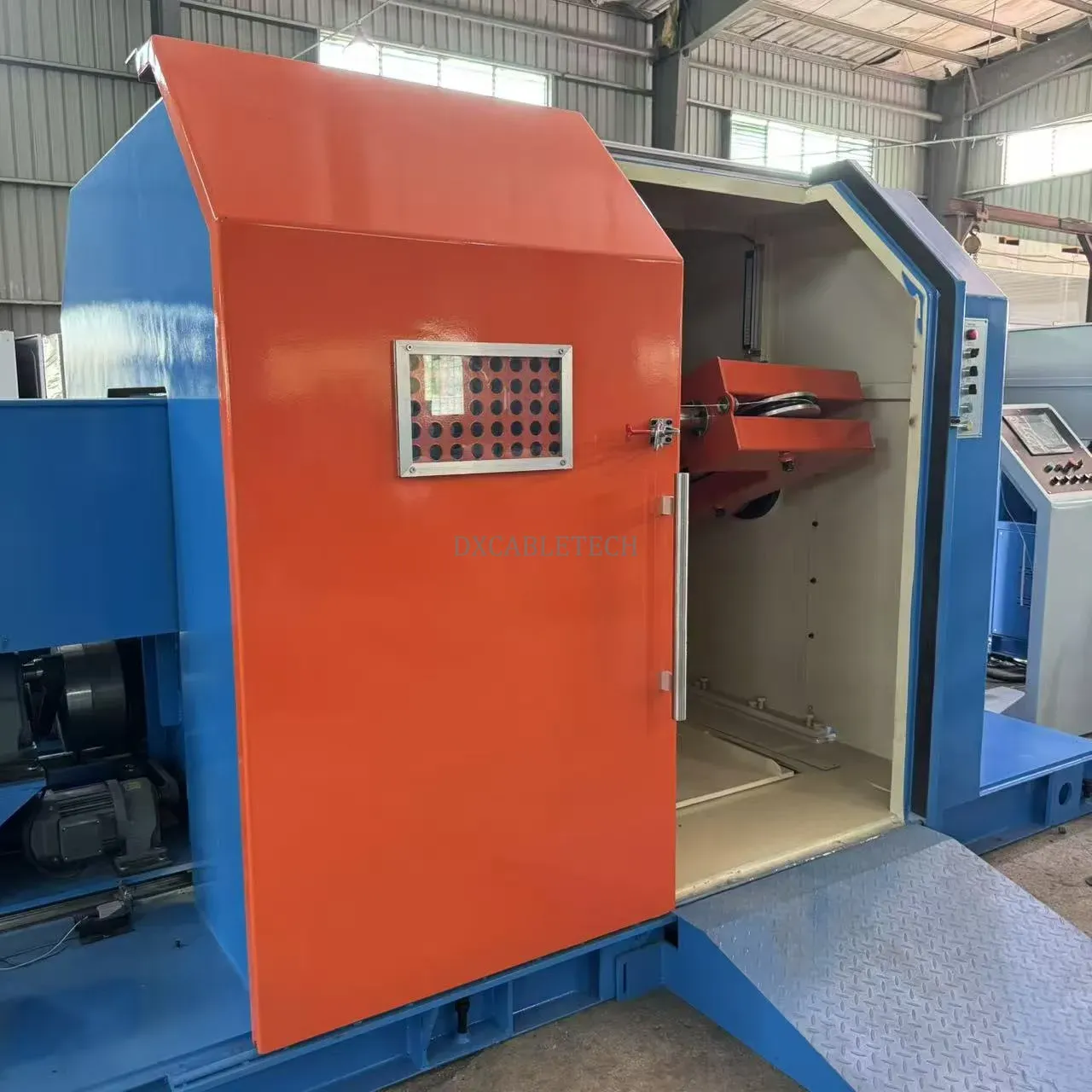
Explore the complete cable manufacturing system:
→ Cable Manufacturing Process & Equipment Guide