Русский
 Türkçe
 Tiếng Việt

Reel overrun is one of the most frustrating problems on a coiling line. One minute the machine is running smoothly; the next, the reel spins freely, wire loops start forming, tension collapses, and the operator is forced to stop the machine, unwind the mess, and restart the cycle.
Most operators describe it as “the reel suddenly taking off on its own,” but overrun is never random. It is a predictable result of mechanical imbalance, poor dancer control, low braking torque, or mismatched synchronization between the pay-off, coiler, and traverse.
When not fixed properly, reel overrun increases scrap rate, damages insulation, and ruins packaging consistency—especially on high-speed automatic coilers used for LAN cable, automotive wire, building wire, and soft PVC/PE products.
This guide breaks down the true engineering causes, how to isolate them, and how to eliminate reel overrun permanently.
1. What “Reel Overrun” Actually Means in Engineering Terms
Reel overrun occurs when the reel rotates faster than the linear cable feed speed.
In simple terms:
Reel rotational speed > incoming cable speed → slack → looping → tangling → emergency stop.
A stable coiling system requires the following to stay synchronized:
line speed (extruder or production line output)
coiling head torque
traverse movement
tension system (dancer / accumulator / load cells)
reel braking and inertia compensation
If any of these components fall out of balance, overrun appears instantly.
2. Fast Diagnostic: How to Identify the Root Category of Overrun
When a reel overruns, observe what happens first:
Case A: Slack appears immediately during startup
→ Braking torque too weak or reel inertia un-compensated.
Case B: Slack appears when the machine accelerates
→ Dancer response too slow, servo gain too low, or control loop delay.
Case C: Slack appears at constant speed
→ Pay-off synchronization drifting or coiling torque not matching load.
Case D: Slack forms only near full reel capacity
→ Reel inertia increasing faster than the braking unit can handle.
Case E: Slack occurs randomly
→ Check gearbox backlash, mechanical slip, or sensor noise.
Once you categorize the behavior, the real troubleshooting becomes straightforward.
3. Mechanical Causes and Solutions
Mechanical issues account for more than half of reel overrun failures—especially in older or non-servo coilers.
3.1 Undersized or Worn Reel Brake
If the mechanical brake can’t provide consistent stopping torque, the reel will keep spinning even after tension drops.
How to test:
Spin reel by hand and engage brake.
If stopping distance is inconsistent, the brake is worn.
Measure torque with a torque meter to confirm spec.
Fix:
Replace brake pads or friction plates.
Upgrade to servo-controlled brake for high-speed lines.
Increase brake pre-tension for heavy reels.
3.2 Inertia Miscalculation for Larger Reels
Reel mass dramatically increases as the coil grows.
A machine calibrated for a 2 kg empty reel may fail at 12–15 kg full load.
Symptoms:
Overrun appears only after 70–90% reel fill.
Traverse moves normally, but reel free-wheels slightly.
Fix:
Update coiler torque profile to compensate for reel mass growth.
Reconfigure machine for heavier max-coil weight.
Add active inertia compensation (servo-based).
3.3 Loose Belts / Chain Transmission Slip
A classic, often ignored problem.
Signs of slip:
Slight vibration near the reel shaft
Reel speed fluctuates visibly
Marks appear on belt or chain links
Fix:
Re-tension belts
Replace worn sprockets
Switch to direct-drive if available
3.4 Bearing Drag or Excessive Friction
Contrary to intuition, too much friction can also cause overrun.
Why? Because operators compensate with too much torque, then lose stability during transitions.
Fix:
Replace high-friction bearings
Re-lubricate according to load class
Use low-friction precision bearings on high-speed coilers
4. Control System Causes and Solutions
Servo synchronization and tension loop tuning determine 90% of coiling stability on modern equipment.
4.1 Dancer Response Too Slow
A common cause: dancer arm moves, but servo reacts late, leaving slack.
Fix:
Increase dancer PID responsiveness
Raise sampling frequency above 500–1000 Hz
Reduce mechanical mass of dancer for faster reaction
Switch to load-cell feedback if dancer is too slow for thin cables
4.2 Pay-Off and Coiler Out of Sync
If pay-off pushes cable faster than the coiler consumes it, slack forms immediately.
Fix:
Re-calibrate both servos to the same line speed reference
Zero all encoders
Separate pay-off and coiler drives (avoid shared control loops)
Ensure communication uses digital feedback, not analog (no delay)
4.3 PLC Scan Time Too Long
If the PLC updates tension values slower than real-time changes, overrun will appear during transitions.
Fix:
Move tension loop to dedicated motion controller
Reduce PLC load
Increase CPU performance or cycle speed
Use high-priority task scheduling
5. Sensor and Feedback-Related Causes
5.1 Faulty or Noisy Tension Sensor
If the tension reading jumps, the servo will misinterpret slack and over-correct.
Fix:
Replace sensors exceeding ±5% drift
Add signal filtering
Re-align sensor mount (very common issue)
5.2 Dancer Position Sensor Scaling Incorrect
If the dancer potentiometer or encoder gives incorrect scaling, the machine will under-compensate.
Fix:
Re-scale dancer travel range
Re-calibrate signal conversion
Replace worn potentiometers
6. Process-Level Causes and How to Fix Them
6.1 Line Speed Too Low for Reel Rotation
If line speed drops but coiler torque stays constant, overrun appears.
Fix:
Use proportional torque control linked to real line speed
Activate “slowdown synchronization” logic
Install automatic torque reduction for low-speed zones
6.2 Sudden Line Speed Changes
Overrun often appears during:
start-up
acceleration
deceleration
emergency stops
coil-change cycles
Fix:
Smooth speed profile (S-curve acceleration)
Add pre-brake activation before speed reduction
Enable servo predictive torque compensation
6.3 Incorrect Reel Size Parameter
Wrong diameter = wrong calculated rpm = instant overrun.
Fix:
Operator training
Automatic reel diameter detection (recommended for high-speed coilers)
7. Engineering Best Practices to Eliminate Reel Overrun Permanently
These methods are used by factories producing high-end LAN and automotive cables.
7.1 Use Closed-Loop Servo Control Instead of Mechanical Friction Brakes
Mechanical brakes cannot adapt to changing coil diameter.
Servo torque control eliminates overrun by adjusting in real time.
7.2 Upgrade to Load-Cell Tension Control
Dancers are good, load-cells are better—especially for thin wires (0.3–1.0 mm).
Benefits:
faster response
less vibration
more accurate tension stabilization
better performance at high speeds
7.3 Install Anti-Overrun Safety Logic
Recommended PLC logic:
automatic braking if dancer leaves mid-range
soft-stop instead of emergency stop
automatic tension recovery
torque limiting on empty reels
inertia compensation per reel diameter
This alone can reduce overruns by up to 60–80%.
7.4 Keep Traverse in Perfect Sync with Reel
When traverse and reel are out of sync, tension waves cause sudden slack.
Fix by:
recalibrating traverse pitch
aligning start position
checking servo backlash
tightening mechanical guides
7.5 Perform Weekly Mechanical Inspection
Checklist:
belt tension
brake pads
reel shaft alignment
bearing friction check
vibration analysis
torque calibration
Preventive maintenance is the cheapest solution of all.
Conclusion: Reel Overrun Is Not an Operator Problem — It’s a System Coordination Problem
When a coiling machine overruns, the first instinct is to blame the operator or “line speed fluctuations.”
But reel overrun always follows predictable causes:
insufficient braking torque
inertia imbalance
poor tension control
servo or PLC delay
sensor miscalibration
mechanical transmission drift
Once the mechanical, control, and tension loops are brought into alignment, reel overrun disappears—even at high coil weights and high line speeds.
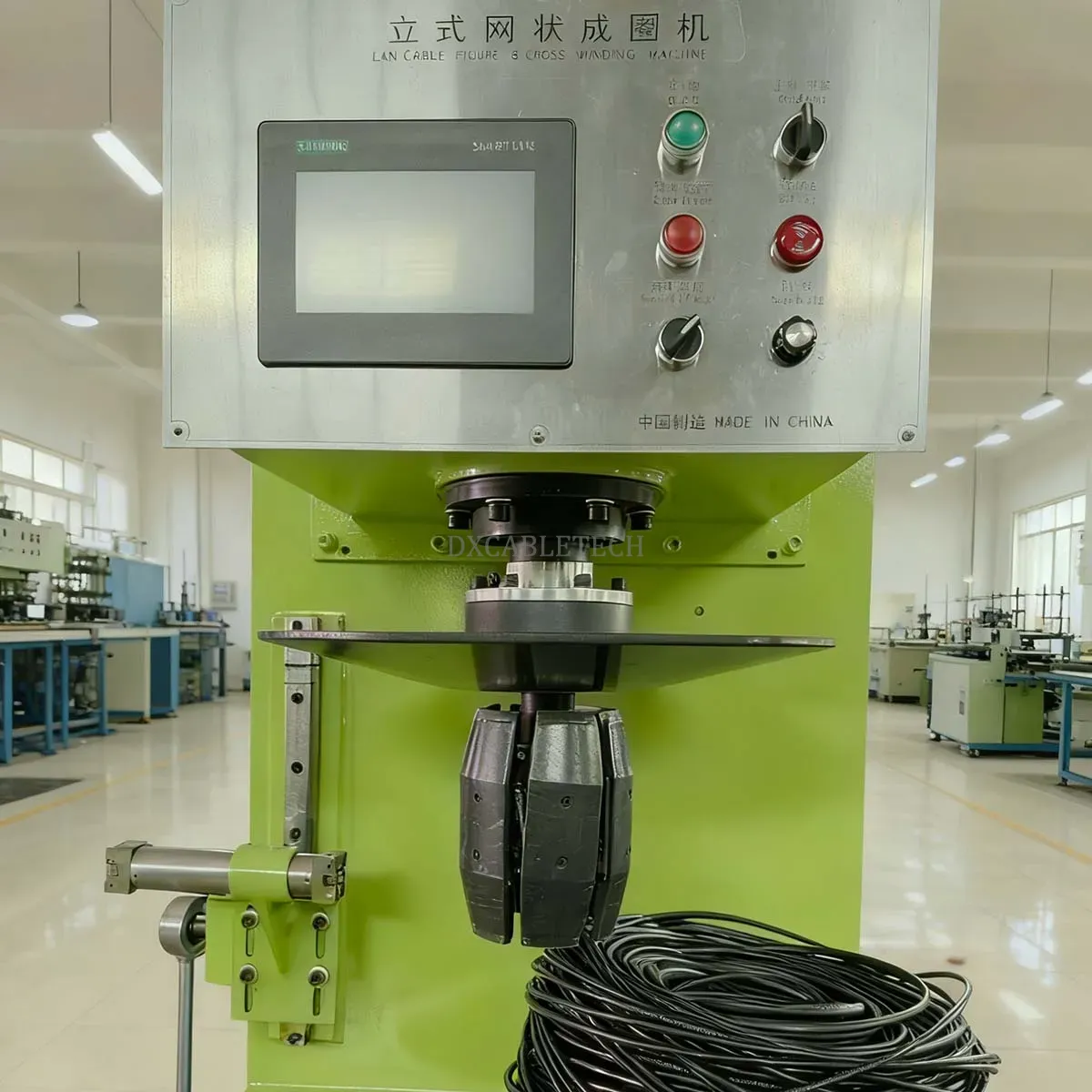
Explore the complete cable manufacturing system:
→ Cable Manufacturing Process & Equipment Guide