Русский
 Türkçe
 Tiếng Việt
What Makes a Cable Production Company Competitive
The global cable manufacturing sector is changing faster than most factories expected.
From rising material prices to tighter tolerance requirements and talent shortages on the shop floor, the pressure on production lines is higher than ever. A decade ago, a cable plant could win business with scale alone. Today, the factories that stay ahead are the ones that master control—control over speed, tension, process stability, and digital data.
This shift is reshaping what it means to be a competitive cable production company. Across Asia, Europe, and the Americas, procurement managers and engineering teams are aggressively upgrading equipment, optimizing workflows, and searching for automation partners who can future-proof their operations.
Among these innovators, Dongguan Dongxin (DOSING) Automation Technology Co., Ltd., known globally through dxcabletech.com, has emerged as a company redefining how modern conductor-processing lines are built, operated, and optimized.
This report explains the new competitiveness standards, the technologies driving change, and what industry leaders are doing differently today.
The New Reality: Precision, Speed, and Zero-Tolerance for Variability
Cable factories once relied heavily on the experience of operators. A senior technician could “feel” when tension drifted, when an extruder zone was running too hot, or when a stranding bobbin was creating vibration. That era is over.
Several forces have reshaped the industry:
Demand for high-spec products, including EV cables, data cables, foam-insulated coaxial lines, and flame-retardant applications.
Volatile copper and polymer prices, leaving almost no room for scrap.
Customer expectations for traceability, especially in telecom and automotive markets.
Global labor shortages, making operator-dependent processes unsustainable.
Shorter delivery cycles, leaving factories no time to deal with instability or downtime.
A competitive cable production company must now demonstrate:
Stable production speeds
Consistent tension control
Digital monitoring and data capture
Low scrap rate during start-up
High-efficiency energy usage
Fast changeover capability
And this new definition of competitiveness is pushing factories to automation at unprecedented speed.
Automation Is No Longer Optional—It’s the Core Competency
Over the last five years, automation has shifted from a “nice-to-have” to the key differentiator in the wire-and-cable industry. Factories that fail to modernize lose orders, increase scrap, and struggle with process instability.
Automation allows factories to replace operator-dependent adjustments with predictable, repeatable performance.
Why Automation Took Center Stage
1. Precision Requirements Are Higher Than Ever
Modern cables—especially communication and EV products—require strict control of:
insulation thickness
concentricity
lay length accuracy
taping overlap
shielding consistency
extrusion temperature
Manual adjustments cannot meet modern tolerance requirements consistently.
2. Material and Energy Costs Continue Rising
Even small variations in diameter or insulation thickness translate to major financial loss. PLC-driven systems minimize deviation and keep polymer usage optimal.
3. Skilled Technicians Are Getting Harder to Find
Automation ensures stable output even when factories rotate operators or run multiple shifts.
4. Global Customers Demand Process Data
Digital reports on speed, temperature, tension, alarms, and diameter control are now a requirement in audits.
This is why automation-focused suppliers like DOSING are becoming strategic partners for cable factories worldwide.
DOSING’s Role in the New Competitive Landscape
Founded in 2009, Dongguan Dongxin (DOSING) Automation Technology Co., Ltd. has built its reputation on technical depth, not just machine supply. Over the years, the company has grown into a full-cycle engineering provider—specializing in R&D, design, manufacturing, and after-sales support for the wire-and-cable industry.
Under the guidance of its founder, a specialist with nearly 30 years of engineering experience, DOSING led the industry by introducing PLC control integration into cantilever single-strand machines. This innovation immediately:
removed long-standing mechanical speed limitations
stabilized torsion output
boosted production efficiency by more than 40%
The same engineering philosophy now extends across DOSING’s entire product portfolio, including:
Core wire insulation extrusion lines
PVC/LSZH sheathing extrusion lines
Physical and chemical foaming extruders
Automatic coiling and taping machines
Shaftless pay-off stands and multi-head pay-offs
Computerized wire cutting systems
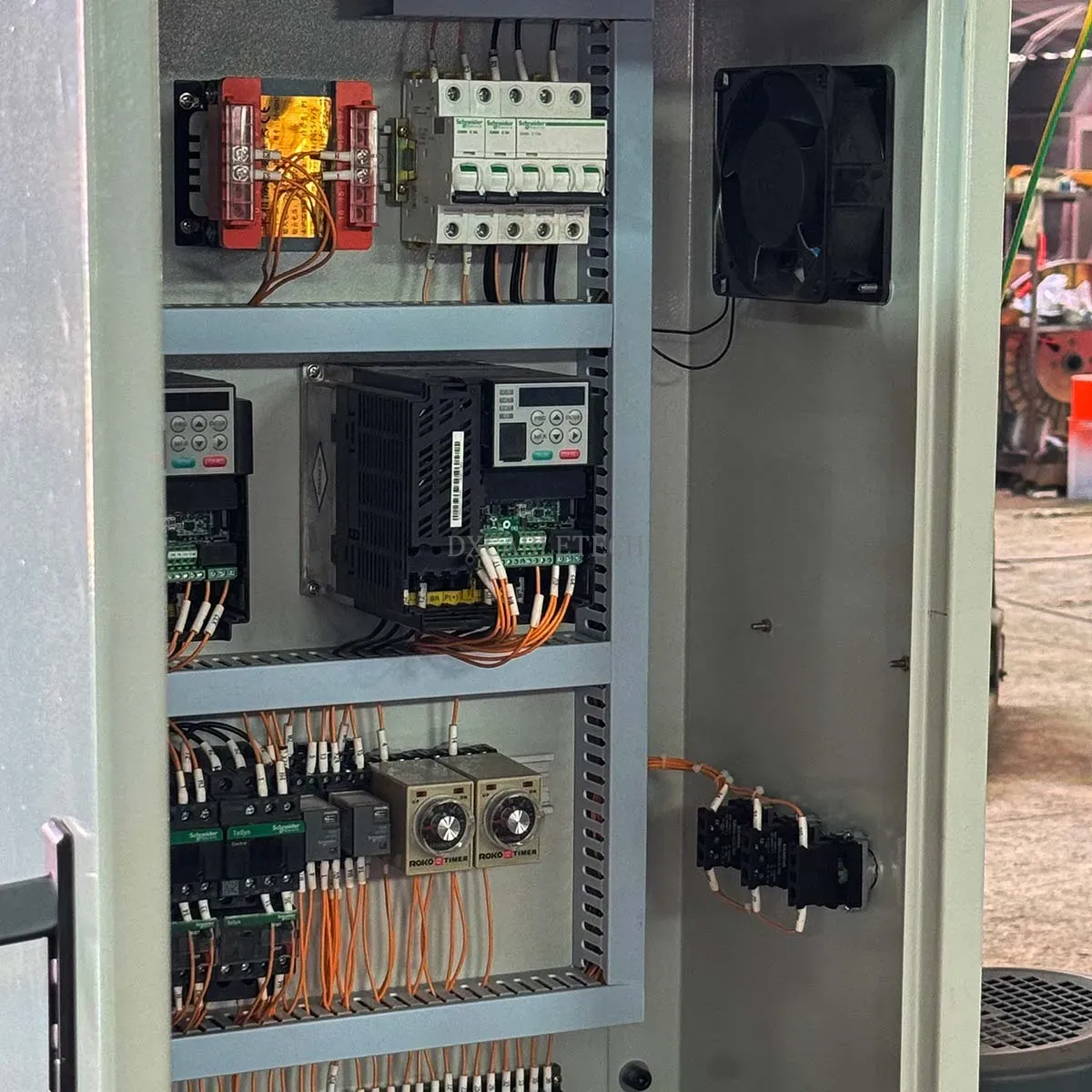
Unlike traditional suppliers, DOSING optimizes machine-to-machine integration, ensuring every piece of equipment communicates smoothly through PLC and HMI systems.
This is the level of engineering precision modern cable factories require to stay competitive.
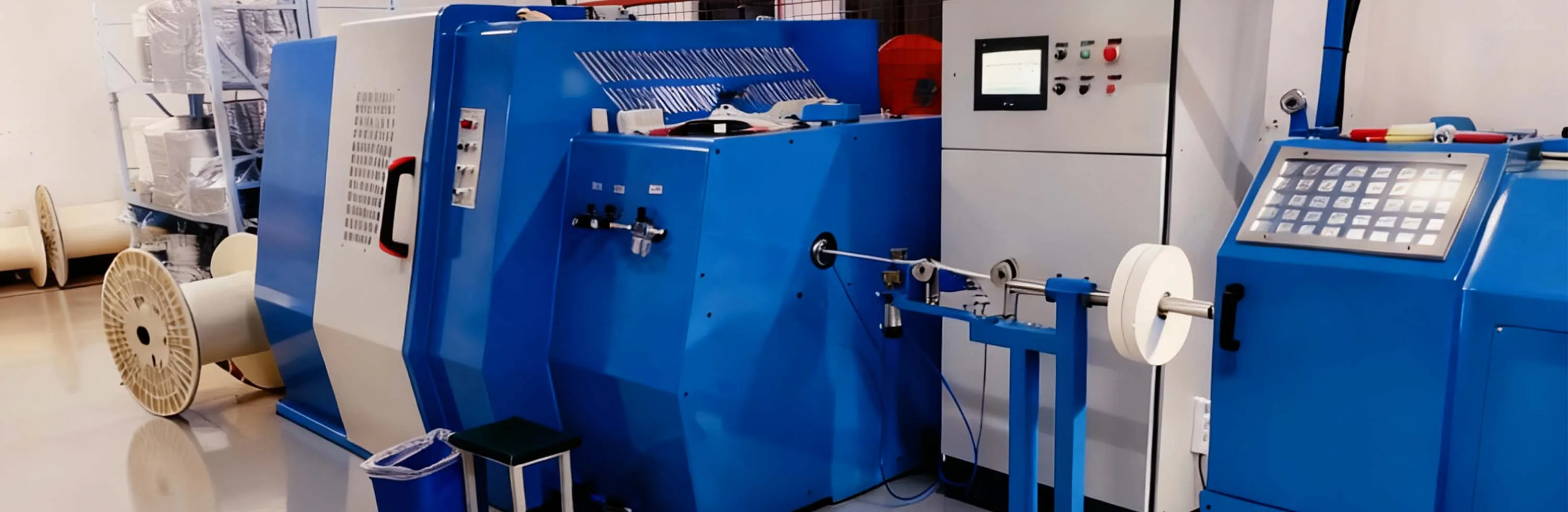
What Competitive Factories Do Differently: A Deep Dive
A high-performance cable production company does not succeed through one machine. Competitiveness comes from a complete ecosystem—designed for speed, stability, and intelligence.
Below are the strategies the top-performing factories share.
1. Advanced Stranding Technology for Superior Conductors
The quality of a cable begins with the conductor. No extrusion line can fix tension problems introduced during stranding.
Top factories adopt:
digital tension feedback systems
vibration-reduction mechanics
precise lay-length synchronization
stable bobbin braking technology
torque-controlled rotation
DOSING’s single-twist systems use PLC-driven synchronization to eliminate tension spikes, especially in data cable and communication cable production.
2. Smart Extrusion Lines for Polymer Stability
Extrusion remains the most energy-intensive and material-sensitive stage. Competitive factories use equipment with:
multi-zone PID thermal control
gear pumps for stable flow
laser diameter gauges for continuous monitoring
automatic speed compensation
optimized cooling troughs for dimensional stability
These systems minimize polymer waste and deliver consistent insulation quality, vital for telecom, EV, and industrial cables.
3. High-Accuracy Taping Units for Shielding Excellence
Shielding and wrapping have become crucial quality indicators in signal cables. Competitive tapping systems must control:
overlap precision
uniform tension
consistent forming of multi-layer tapes
compatibility with aluminum foil, mica, cotton, polyester, and specialized tapes
Factories upgrading to automated taping units report a significant reduction in downstream extrusion defects.
4. Automated Coiling, Cutting, and Packaging
Labor reduction isn’t the only benefit—automation ensures stable, repeatable output.
High-end factories invest in:
automatic coil formers
tension-adjusted take-up systems
servo-driven cutting modules
These reduce operator error and support continuous operation across long shifts.
5. Integrated Data Monitoring and QC Systems
The most competitive factories are no longer defined by machine count—they are defined by data transparency.
Common features include:
HMI dashboards
alarm logs
tension curves
diameter histories
temperature graphs
real-time speed tracking
This transparency directly influences customer trust and audit performance.
The Profitability Impact: Why Automation Pays for Itself
Factories often underestimate how quickly automated systems deliver ROI.
1. Increased Throughput
Stable high-speed operation leads to significantly higher daily output.
2. Reduced Scrap and Rework
Precise control over tension, diameter, and thermal conditions cuts material loss dramatically.
3. Lower Labor Dependency
Automated systems need fewer operators and reduce skill-related inconsistencies.
4. Predictable Maintenance Costs
Standardized components and PLC diagnostics minimize downtime.
Most factories achieve payback between 12 and 36 months, depending on their product mix and shift schedule.
What the Future Holds for the Cable Manufacturing Sector
Over the next decade, competitive factories will integrate:
AI-assisted extrusion tuning
digital twin simulations of production lines
cloud-based quality monitoring
cleaner and more energy-efficient heating systems
advanced foaming technologies
modular quick-change equipment
Factories that automate early will dominate regional markets. Those who delay risk lagging behind automation-driven competitors.
Conclusion: What Truly Makes a Cable Production Company Competitive
A competitive cable production company today is defined not by size, but by:
automation depth
process stability
digital capability
material efficiency
engineering partnership with suppliers
This is why companies such as DOSING Automation, through dxcabletech.com, are becoming essential partners for manufacturers looking to upgrade. With strong R&D, PLC-driven systems, and full-cycle engineering support, DOSING provides the tools factories need to stay ahead in a demanding global market.
The industry is transforming fast.
The winners will be the ones who automate with purpose, invest with strategy, and choose partners who understand the future of wire-and-cable production.
Explore the complete cable manufacturing system:
→ Cable Manufacturing Process & Equipment Guide