Русский
 Türkçe
 Tiếng Việt

Cables are the unsung arteries of modern infrastructure. They carry power invisibly to homes, offices, factories, and renewable energy projects, yet most people rarely consider their complexity or importance. For decades, low-voltage (LV) cables have formed the backbone of residential and small commercial electricity distribution, providing reliable, cost-effective solutions for short-distance power transmission.
However, in recent years, medium-voltage (MV) cables—rated between 1 kV and 35 kV—have been outpacing LV cables in demand. The shift is driven by a combination of urban expansion, industrial electrification, renewable energy integration, aging infrastructure, and increasing technical sophistication requirements. MV cables are no longer optional for modern energy networks—they are critical for efficiency, reliability, and safety.
1. Urban Expansion: Powering Growing Cities
Urbanization remains one of the most significant drivers of MV cable demand. Across Asia, Africa, and Latin America, cities are expanding at unprecedented rates, with new residential towers, commercial complexes, and industrial zones rapidly increasing electricity consumption.
Low-voltage cables, while adequate for homes and small buildings, cannot carry high currents efficiently over long distances without significant energy loss. MV cables, with higher voltage ratings, allow power to travel farther with reduced line losses and improved voltage stability. This makes them indispensable for large-scale urban infrastructure.
Take Jakarta, Indonesia, for example. The city’s rapid development in high-rise residential and commercial zones created a pressing need for MV networks. Utilities replaced old LV systems with medium-voltage solutions, resulting in reduced energy losses, improved safety, and room for future load expansion.
Similarly, in Southeast Asia, industrial parks spanning hundreds of hectares rely on MV cables to power heavy machinery and automated production lines. These facilities often operate around the clock, where even a brief power disruption can halt production, delay shipments, and cause financial losses. MV cables provide the stability and reliability required for these high-stakes operations.
2. Industrial Electrification: Reliability and Capacity
Industrial growth is another critical factor in the rising demand for MV cables. Modern factories, data centers, and automated facilities require large amounts of continuous, high-quality power. Low-voltage cables are insufficient for these loads; medium-voltage systems provide the capacity to maintain production efficiency and prevent costly downtime.
For instance, a high-tech manufacturing facility in Thailand upgraded its infrastructure from LV to MV networks. The transition allowed higher equipment density, increased energy efficiency, and significant reductions in voltage drop incidents. In this case, investing in MV cables was not merely a technical decision—it was a strategic business move.
In North America and Europe, many existing industrial plants are retrofitting LV networks with MV cables to accommodate growing energy demands. With industrial electrification advancing and smart factories emerging, MV cables are becoming the standard for modern production facilities.
3. Renewable Energy Integration: Meeting Higher Voltage Needs
The global transition to renewable energy has further accelerated the adoption of medium-voltage cables. Solar farms, wind farms, and microgrids operate at voltages beyond the safe range of LV cables. MV cables ensure efficient transmission of electricity to the grid while minimizing energy losses and supporting long-distance distribution.
In Latin America, a 200 MW solar farm in Chile relied on MV transmission to connect remote generation sites to the national grid, covering more than 30 kilometers. The project achieved minimal losses, ensuring regulatory compliance and operational efficiency. Similar trends can be observed across Africa and Southeast Asia, where expanding wind and solar installations are driving substantial MV cable demand.
MV cables also facilitate the integration of intermittent renewable sources into existing grids. By enabling efficient power distribution from distributed energy resources, they help stabilize grids and allow for broader adoption of sustainable energy solutions.
4. Infrastructure Modernization: Upgrading Aging Networks
Even in developed markets, aging electrical infrastructure is prompting utilities to upgrade networks. Many LV systems installed decades ago cannot support contemporary electricity demands, from electric vehicle charging stations to smart grids and distributed energy storage. MV cables are essential in these upgrades, offering higher capacity, improved voltage regulation, and long-term reliability.
In Germany, several municipal grids are being replaced with MV solutions to reduce line losses and accommodate renewable energy inputs. In the U.K., MV network upgrades are critical to supporting urban densification and new industrial projects. These projects often involve technical challenges such as high-density installation, environmental stress tolerance, and compliance with stringent safety standards—all addressed by advanced MV cable technologies.
5. Technical Complexity and Manufacturing Excellence
Manufacturing medium-voltage cables is significantly more complex than producing LV cables. Conductors, usually high-purity copper or aluminum, must meet strict electrical and mechanical standards. Insulation and jacketing materials must withstand elevated voltages, temperature fluctuations, mechanical stress, and environmental conditions over decades of use.
Advanced extrusion lines, precision conductor stranding machines, and automated quality control systems are essential for producing reliable MV cables. DX Cable Tech, for example, invests heavily in these technologies to ensure that every cable meets international standards. Thermal aging tests, voltage withstand testing, and mechanical integrity assessments are routine, ensuring performance even in high-demand applications.
Moreover, MV cables must adhere to specific installation standards, including proper bending radius, jointing, and termination techniques. These requirements make engineering support and installation expertise crucial for successful deployment, creating opportunities for manufacturers to offer value-added services beyond cable production.
6. Market Opportunities and Strategic Growth
Medium-voltage projects are generally larger and more complex than LV installations, offering higher margins and long-term client relationships. While LV cables remain essential for basic distribution needs, MV cables are the primary growth driver in the cable industry today.
Manufacturers that combine technical expertise, consistent material quality, and strong client support position themselves to dominate the market. Innovations such as smart monitoring systems, improved insulation materials, and higher-performance conductors are expected to further accelerate demand. MV cables are not merely technical components—they are strategic infrastructure enabling urban expansion, industrial productivity, and renewable energy adoption.
7. Regional Variations and Global Trends
Demand for MV cables varies by region, reflecting differences in industrialization, urbanization, and renewable energy adoption. Asia-Pacific is currently the largest market due to rapid urban and industrial growth. Europe focuses on infrastructure modernization and renewable energy integration, while Latin America and Africa see growth primarily from renewable energy projects and urban expansion.
Global analysts forecast that the MV cable market will grow at a compound annual growth rate (CAGR) of 6–8% over the next decade, significantly outpacing LV cable growth. This trend is reinforced by government initiatives, energy transition policies, and rising industrial power demand.
Conclusion
Medium-voltage cables have become a cornerstone of modern power systems. Urban expansion, industrial electrification, renewable energy integration, and infrastructure modernization are all driving unprecedented global demand. Low-voltage cables remain essential for residential and local distribution, but MV solutions are increasingly critical for large-scale energy transmission and industrial operations.
For manufacturers like DX Cable Tech, success in this market requires investment in advanced production technologies, high-quality materials, rigorous testing, and engineering expertise. Companies that can deliver reliable, high-performance MV cables while supporting clients with technical solutions are poised to lead the global energy infrastructure of the next decade.
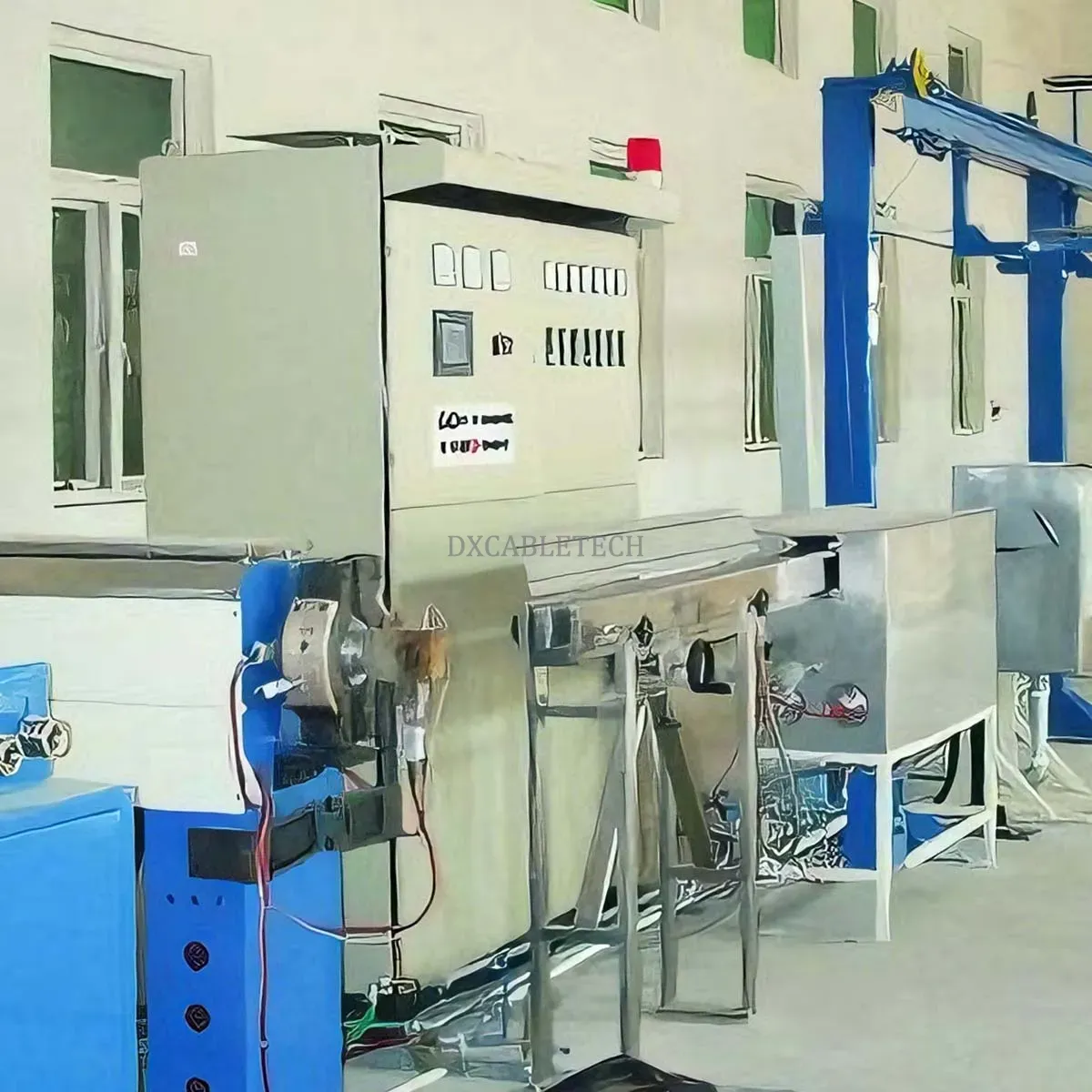
Explore the complete cable manufacturing system:
→ Cable Manufacturing Process & Equipment Guide